South Korea's Happiness Score Falls to 6.040, 67th in World Happiness Report
South Korea’s self-reported happiness score fell again in the latest World Happiness Report, dropping to 6.040 out of 10 and ranking 67th overall. The decline marks a nine-spot fall from last year and a six-spot drop from two years ago. The report covers data from 2023 to 2025 and was released by Gallup in collaboration with the University of Oxford’s Wellbeing Research Centre and the United Nations Sustainable Development Solutions Network, around International Day of Happiness on March 20.
The World Happiness Report combines survey responses on life satisfaction with six indicators: GDP per capita, healthy life expectancy, social support, freedom to make life choices, generosity, and perceptions of corruption. In Korea’s case, the country scored relatively well on GDP per capita, life expectancy, social support, and freedom, but scored lower on generosity (charitable and community contributions) and on perceptions that corruption is low compared with leading nations.
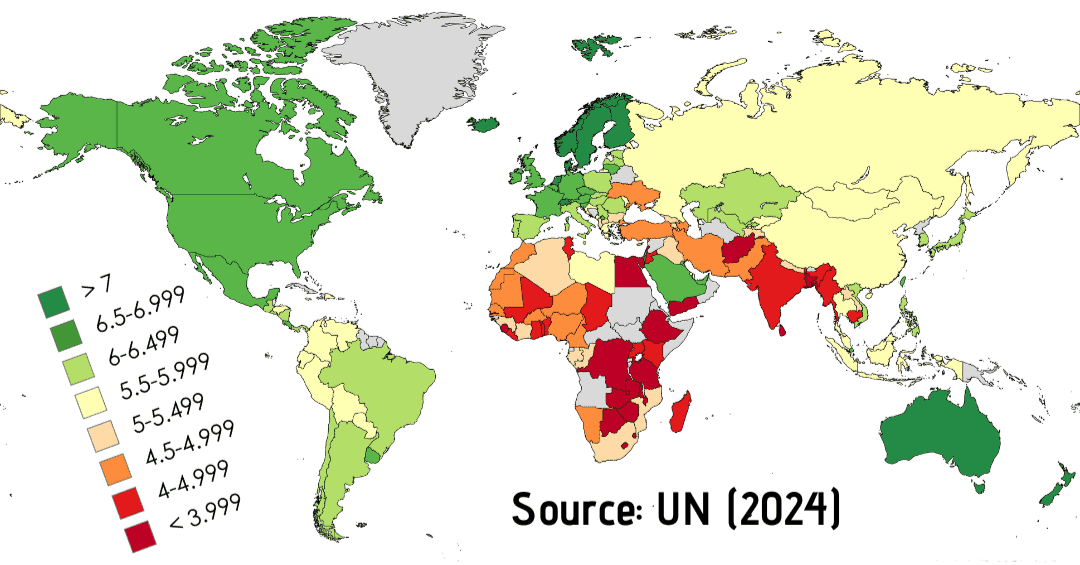
Globally, the Nordic countries again sit at the top. Finland leads with a score of 7.764, followed by Iceland at 7.540 and Denmark at 7.539. Among major economies, the United States scores 6.816 and ranks 23rd, Japan 6.130 in 61st place, and China 6.074 in 65th. Israel, despite regional tensions, ranks eighth with 7.187. Russia sits at 79th with 5.835, Ukraine at 111th with 4.658, and Afghanistan remains at the bottom with 1.446. North Korea was not included in the survey.
For U.S. readers, the Korea result matters beyond its borders because South Korea is a critical hub for global tech manufacturing, electronics, and advanced materials, including many components used in American supply chains and consumer devices. Social well-being and perceptions of corruption can influence labor markets, consumer demand, investment climate, and political stability—factors that affect business operations, regional security arrangements, and the reliability of long-standing U.S.-Korea partnerships.
In practical terms, a sustained dip in happiness scores can reflect or foreshadow pressures in social safety nets, public trust, and civic participation. For policymakers and investors, the WHR offers a broad, comparative read on societal resilience, which, in a U.S.-connected economy, can translate into volatility or steadiness in markets, talent pools, and collaboration with multinational firms that rely on South Korea’s innovation and supply chains.