Damien Hirst Opens First Major Asia Solo Exhibition at Seoul's MMCA
Damien Hirst’s first major solo exhibition in Asia opens at the National Museum of Modern and Contemporary Art (MMCA) in Seoul, under the title Damien Hirst: Truth Is Not There, Yet Everything Is Possible. The show runs from May 20 to June 28 at MMCA Seoul and surveys about 50 works spanning roughly four decades of the British artist’s career.
The exhibition is structured into four sections, each exploring different questions about life, death, time, science, religion, and desire. The labels translate as: “All Questions Come with Doubt,” “We Live in Time,” “The Luxury of Silence,” and “The Artist’s Studio: Works in Progress.” Together, they frame Hirst’s ongoing interrogation of what art can be and what it says about contemporary society.
Among the high-profile works on view are pieces that helped propel Hirst to global prominence. The show includes the monumental installation The Physical Impossibility of Death in the Mind of a Living Being (1991), a shark preserved in a glass tank, along with The Year (1990). Notable loans highlighted for Asia include For the Love of God (2007), the platinum skull encrusted with diamonds; and the three-panel work Meditating on God’s Infinite Power and Glory (2008).
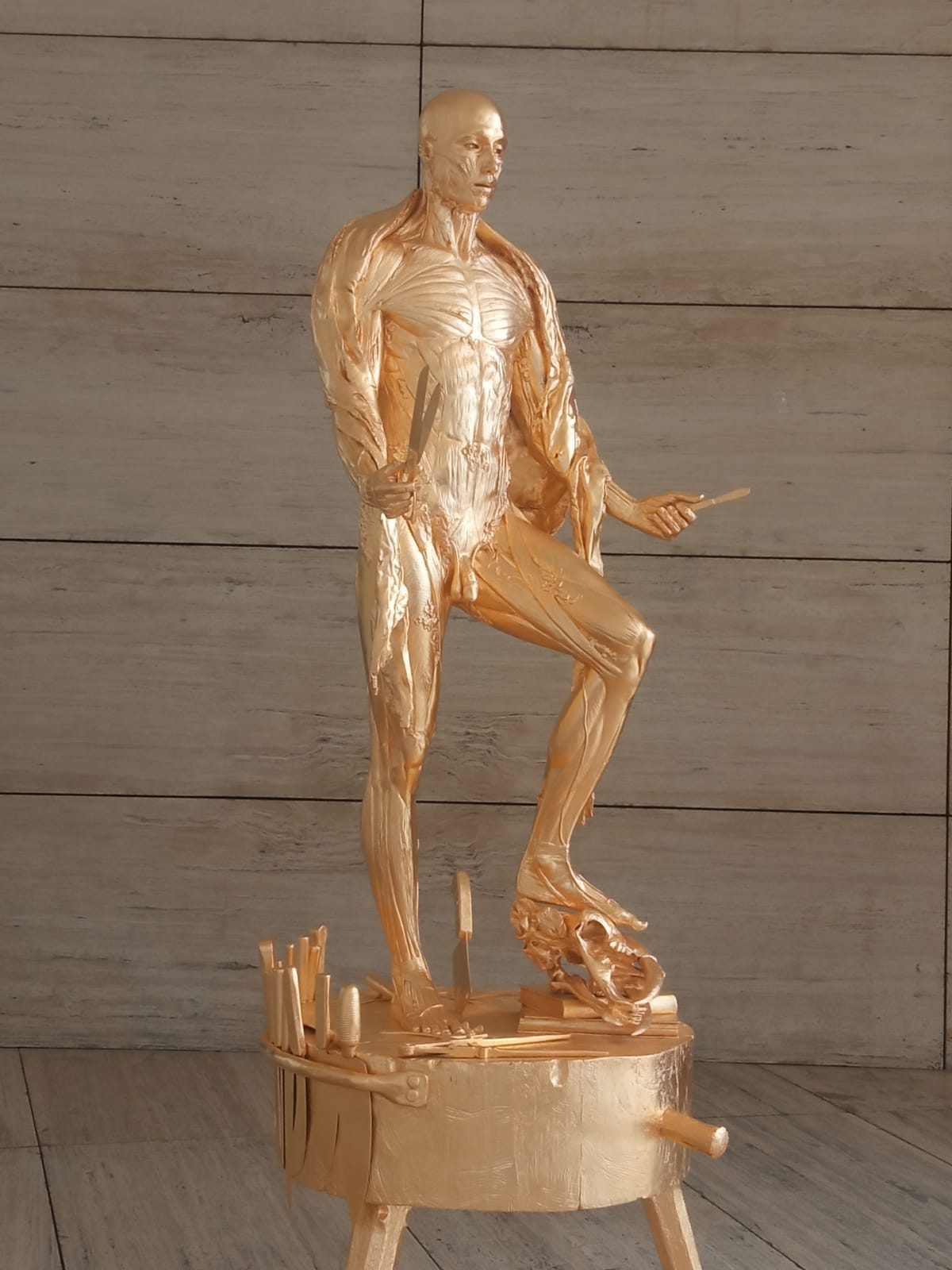
Other works in the show examine religious imagery and medical culture, including Saint Bartholomew, Torment (2007) and Anatomy of an Angel (2008). The display also features a recreation of the artist’s London restaurant project Pharmacy, a space that uses pharmaceutical imagery to comment on faith in science and medical culture.
A dedicated section reproduces Hirst’s working studio, relocated from London to MMCA as The Artist’s Studio: Works in Progress. Visitors can see unfinished canvases, brushes, studio clothes, and other studio props, providing a rare, behind-the-scenes glimpse into the artist’s process. The exhibition even includes a mirror bearing the Korean phrase “I love you, Korea,” handwritten by Hirst.
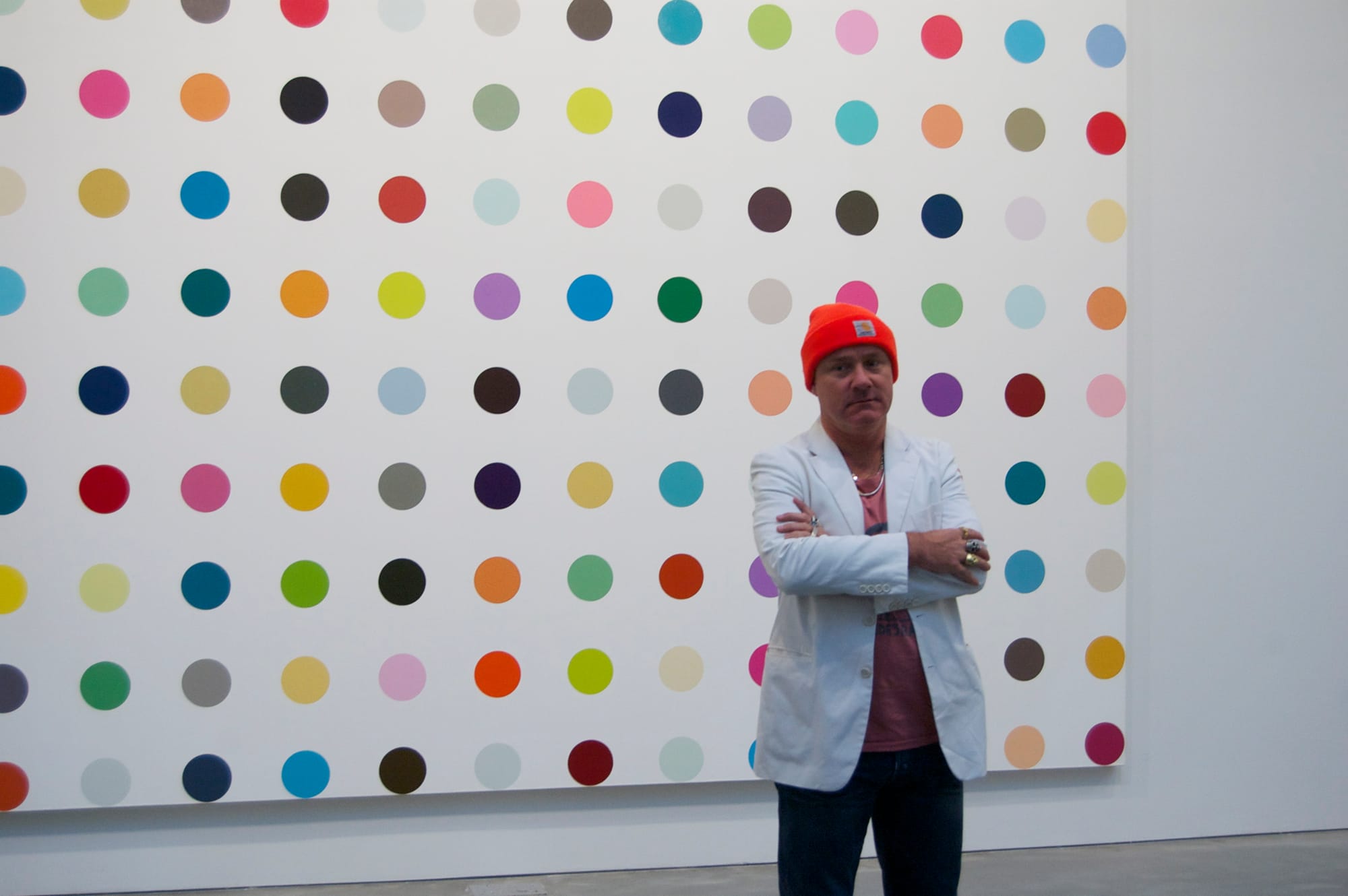
MMCA director Kim Sung-hee described Hirst as a pivotal figure in British art who reshaped expectations of what art can be through provocative, technically ambitious work. Hirst, who was born in 1965 in Britain and rose to prominence with the Young British Artists movement in the late 1980s, said during a press briefing that Korea is a wonderful place and that he has enjoyed multiple visits to the country.
The show’s breadth is intended to map four decades of Hirst’s practice in a single venue, spotlighting works that fuse science, religion, medicine, and consumer culture. For U.S. readers, the exhibition matters as a sign of the continuing global mobilization of Western contemporary art, with Asia playing an increasingly central role in curatorial visions, market dynamics, and cultural exchange. The Asia premiere of this scale and scope also signals how U.S. galleries, museums, and collectors are engaging with cross-border conversations about art, technology, and the ethics of representation in the 21st century.