Korean poetry's decade top seller; Han Kang's Nobel boosts global interest.

A Korean online bookstore survey has found that a 2015 poetry collection by Na Tae-ju is the best-selling poetry book in Korea over the past decade. Yes24 conducted the ranking ahead of World Poetry Day on March 21, tracking poetry sales from 2016 through 2026.

The top title, I Look at You as If You Were a Flower, spent 20 weeks in Korea’s overall top-20 bestselling list across the decade and was the most purchased poetry book across all age groups from teens to those in their 40s.
THE FRAGILE LIFE EXPECTANCY
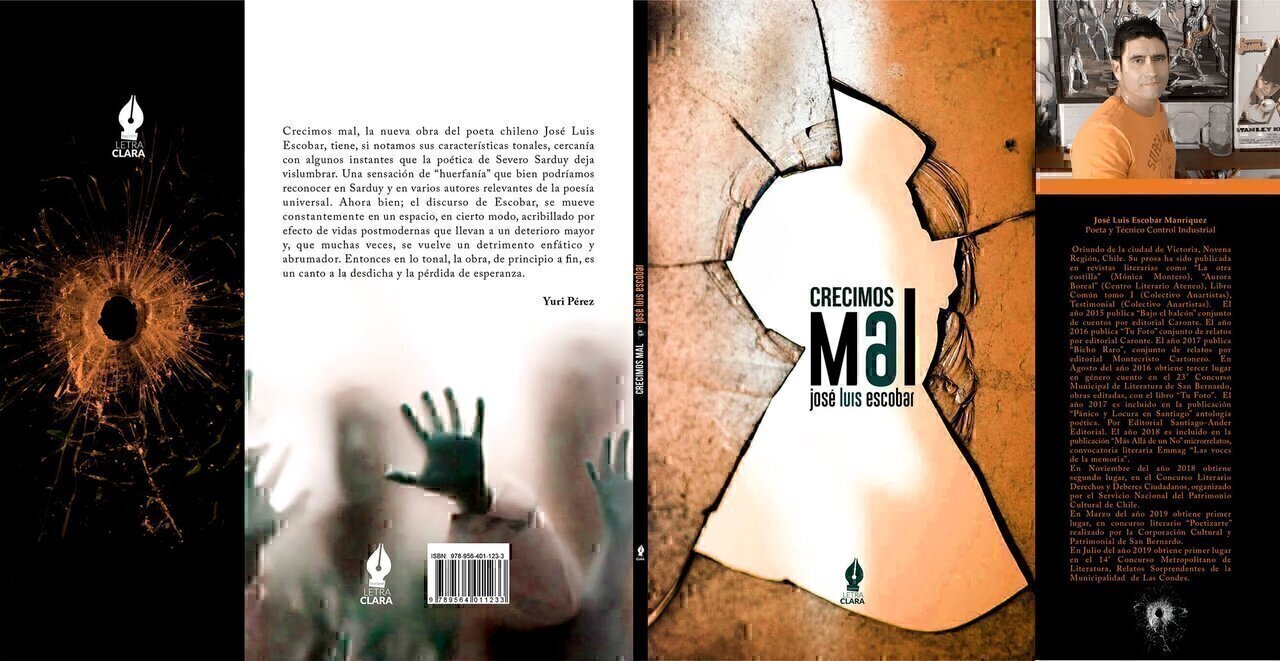
About the book Crecimos mal (96 pages), José Luis Escobar (Chile)
Ediciones Letra Clara, February 2020, by Yuri Pérez.
"Not the dream: the loss. The white rodent, who blinds. I lose foot. Everything is a floodgate.
Look: the wall is bleeding."
Severo Sarduy (Cuba, 1937- France, 1993)
"Crecimos mal", the new work of the Chilean poet José Luis Escobar, has, if we notice its tonal characteristics, closeness with some moments that the poetics of Severo Sarduy allows to glimpse. A sensation of "orphanage" that we could well recognize in Sarduy and in several relevant authors of universal poetry. However, Escobar's discourse moves constantly in a space that is, in a way, riddled with the effect of post-modern lives that lead to greater deterioration and that often becomes an emphatic and overwhelming detriment. So in tonal terms, the work, from beginning to end, is a hymn to misery and loss of hope. 
Here, in this book, the influence of the aesthetic and stylistic proposal of Juan Luis Martínez, the irreverent Chilean poet who had the brilliance to write a remarkable text about the disappearance of a subject in a house that may or may not exist, makes sense. So, here we find influences from Sarduy, in what has to do with the tone of helplessness, of loss of balance and of feeling that one is not in any place that is kind. Perhaps the speaker in this book is one more of those who recognize themselves in the streets of an underdeveloped Chile, full of affective, spiritual, intellectual or material deficiencies. Perhaps the speaker is one who looks at himself in the window of a store that sells everything and takes away everything, even honor and moderation. 
In a space delimited by these demarcations, we cannot assume that the smile, as a gesture of happiness, is spontaneous, let alone a constant one. However, the book does not become a melodramatic performance about existence. What does happen and sprout is a rage that has been wintering in the veins for a long time. A rage that later settled as a vindictive story where more than providing hope, it promotes the acceptance of the loss of everything that gave us identity, or took away identity. Therein lies the only refreshing relief; seeing and recognizing oneself. 
Now, if we think about the work of Martinez, (La Nueva Novela -1977 Ediciones Archivo), one of the most valuable works written in the twentieth century in Latin America, José Luis Escobar gathers from it certain elements that he later remasters in favor of his writing proposal; For example, the distribution of the text on the page, where the final idea is not the practice of "Caligrama" as a poetic expression, but the text is manifested as an element that seeks to break the logical order of the space that contains it, works and ratifies the character and tone of the general work. There are several texts that are written transfiguring the traditional way of verse. Here the work in free verse is altered and taken to places where poetic prose emerges to strengthen the story of the book. For the same reason, it is not by chance that in this project of work, the poetic prose has an important place. 
Then, in the tonal aspect, José Luis Escobar could well be close to Severo Sarduy (although the author of "Crecimos Mal" may or may not have read Sarduy; for it is known; the writing of poetry is reiterated and the tonal links between one author and another are, in the majority of cases, accidental but reiterative).  
This book promotes a poetics that is on the edge of everything we see, that we feel. Not, by the way, in the manner of the "cursed French poets", but loaded with identity traits that situate the discourse in Latin America, so rudimentary and varied. Finally, if for Sarduy the rage was having to leave Cuba in order to write his work, in the case of José Luis Escobar, the issue is just as complex, because the speaker has not left "Del Horroso Chile" (From "A partir de Manhattan", 1979, poem "Nunca salí del Horroso Chile, Enrique Lihn- 1929-1988).  
With respect to the links or aesthetic relations of this work with the Chilean author Juan Luis Martínez, the greatest link is the annulment of the author; that which comes as "self-annihilation of the speaker", as the only way of vindicating or giving sustainability to the writing of poetry. In this sense, loneliness becomes tremendous and unmanageable and the search for human company or whatever, he concludes, most of the time, in a state of raving that sharpens even more the feeling of orphanhood.  In "Crecimos Mal" by José Luis Escobar, the territories where the characters circulate are identifiable, adjacent, so much so that few could say that they were not or will not be on the periphery of the social, cultural and political life of a country like ours. 
Yuri Pérez
San Felipe, summer 2019 

Translated with www.DeepL.com/Translator (free version)
Representative image for context; not directly related to the specific event in this article. License: CC BY-SA 4.0. Source: Wikimedia Commons.

In second and third place were two other well-known Korean poets: Kim Yong-taek’s Perhaps the Stars Might Take Your Sorrow and Han Kang’s I Put Evening in the Drawer. Han Kang’s poetry collection saw a dramatic sales boost after she was awarded the Nobel Prize in Literature in 2024, with sales rising about 67-fold year over year.

Na Tae-ju’s other poetry volume, The Heart Kept to the End, ranked eighth in the decade-long survey, underscoring the author’s continued popularity in Korea’s poetry market.

Demographics in the latest data show growing demand among younger readers: last year, readers aged 10–20 accounted for 19.2% of poetry buyers, up from 11.7% in 2020. Teen poetry purchases rose 97.2% year over year last year, and increased 51.5% this year compared with the same period a year ago.
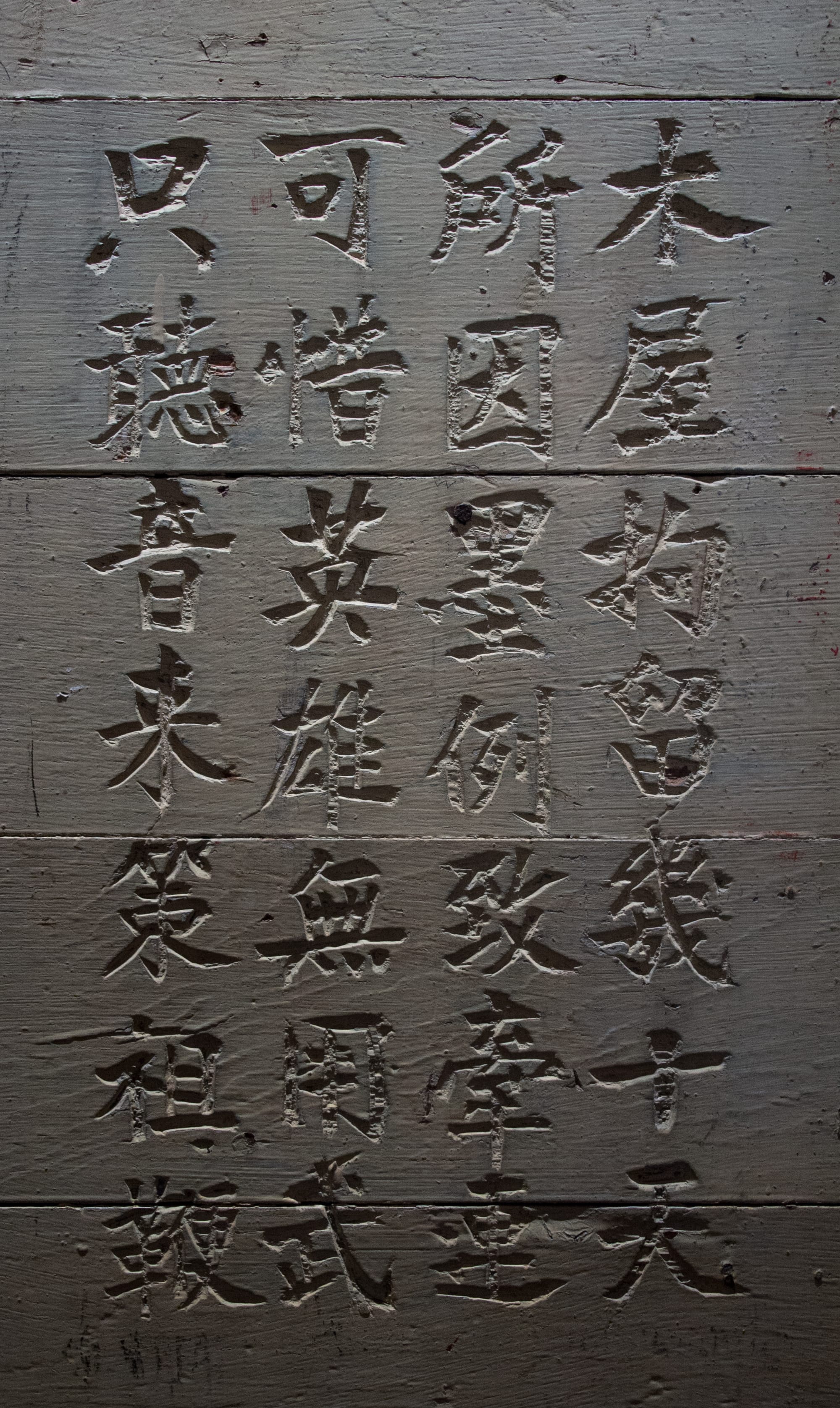
Chinese poetry (column 2) on the wall in the Angel Island Immigration Station. See also column 1.
Representative image for context; not directly related to the specific event in this article. License: CC BY-SA 4.0. Source: Wikimedia Commons.

Yes24’s findings, published around World Poetry Day, illustrate how Korea’s online book market shapes reading habits and literary demand. The results also reflect how a Nobel Prize win in 2024 can amplify interest in a Korean author’s broader body of work within international markets.

For U.S. readers, the report highlights potential implications for translation and publishing: rising interest in Korean poetry, especially among younger audiences, and the global attention generated by Han Kang’s Nobel Prize may spur greater demand for Korean poetry translations and related literary exchanges. As Korean literature gains visibility abroad, online retailers and publishers could play a key role in accelerating cross-cultural access to these works.

Subscribe to Journal of Korea

Don’t miss out on the latest issues. Sign up now to get access to the library of members-only issues.
jamie@example.com
Subscribe