Trump urges Hormuz naval deployment, cites disputed Korea troop figures
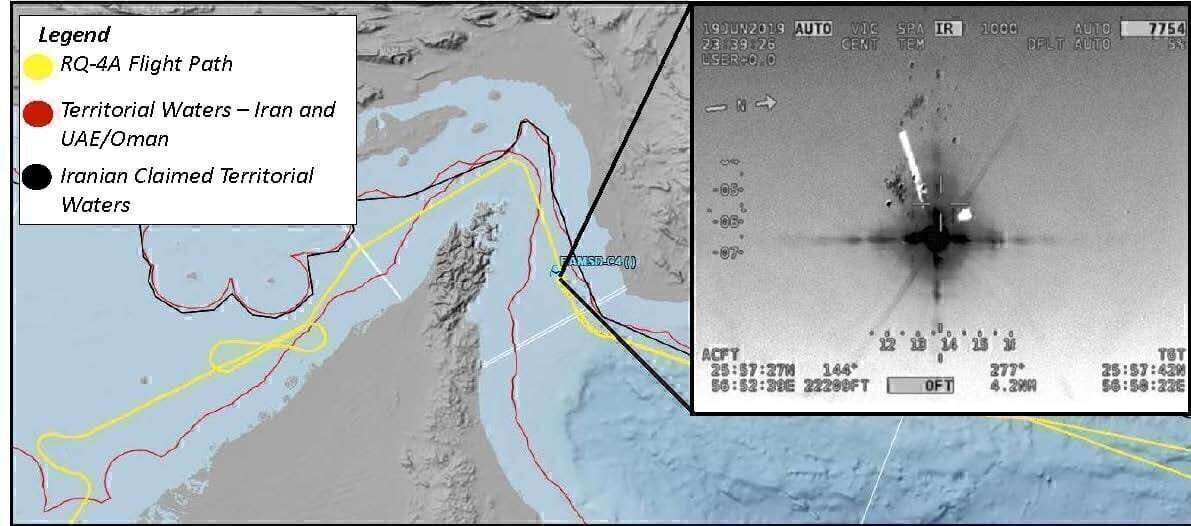
President Donald Trump used a White House event to again urge American naval deployment to the Strait of Hormuz, arguing that the United States should bolster protection of a major shipping chokepoint and citing what he described as large U.S. troop footprints in several countries, including Korea, as part of the justification.
The president asserted that about 45,000 U.S. troops are stationed in Korea, and offered similar figures for Japan and Germany, although the actual U.S. military presence in Korea is widely reported to be about 28,500 personnel. Officials have long cautioned that Trump has at times used inflated numbers in public statements about foreign deployments, and the article notes that the cited figures do not match official counts.
Trump said that many nations claim readiness to act, but suggested some would not participate if called upon, indicating that any request for help serves less to secure aid than to test allies’ loyalty or resolve. He described his approach as watching for responses rather than relying on necessity alone, and he implied some countries would not follow through on commitments.
During the same exchanges, the president touched on energy security, arguing that the United States imports only a small share of oil via the Hormuz route while other nations depend far more heavily on it. He attached specific percentages to Japan, China, and Korea for illustrative purposes, noting that some countries rely much more on Hormuz than others; the report adds that those figures were inflated and unverified.
In the Middle East, the Israeli military said it carried out strikes near the Lebanese border and, in a separate announcement, claimed the death of Ali Larijani, described as Iran’s top national security official. Israel’s defense minister, Yoav Galant, subsequently echoed the claim. Iran did not confirm Larijani’s death at the time, and the government had organized a temporary leadership body following notable leadership transitions.
![Detail of a scene in the bowl of the letter 'P' with a woman with a set-square and dividers; using a compass to measure distances on a diagram. In her left hand she holds a square, an implement for testing or drawing right angles. She is watched by a group of students. In the Middle Ages, it is unusual to see women represented as teachers, in particular when the students appear to be monks. She is most likely the personification of Geometry, based on Martianus Capella's famous book De Nuptiis Philologiae et Mercurii, [5th c.] a standard source for allegorical imagery of the seven liberal arts.
Illustration at the beginning of Euclid's Elementa, in the translation attributed to Adelard of Bath.](https://journalkor.site/content/images/2026/03/02_Woman_teaching_geometry.jpg)
The same moves, if confirmed, come amid broader tensions between Israel and Iran and within Iran’s security establishment, with Tehran’s external diplomacy and internal security coordination historically centralized under different acting bodies. The Israeli claim also touched on a separate statement that forces targeted Basij Militia commander Gholamreza Soleimani.
For U.S. readers, the developments matter beyond Korea because Hormuz remains a crucial conduit for global energy shipments and a focal point of U.S. security guarantees in the Middle East. Any change in the level of regional deterrence or risk to shipping lanes can affect energy markets and supply chains worldwide. The reported European reaction, cited by The Wall Street Journal as illustrating Europe’s hesitation to engage deeply in the escalations, underscores potential geopolitical frictions that could influence U.S. diplomacy and defense planning.