Trump urges allied navies to escort Hormuz oil tankers; Korea's reliance noted.

On the 16th local time, President Donald Trump urged allied navies to participate in an escort operation for oil tankers through the Strait of Hormuz, telling reporters at the White House that the United States has long supported the security of its allied partners.

Although he did not name Korea directly, Trump cited how much some countries rely on Hormuz for their oil imports, noting that Japan gets about 95% of its oil via Hormuz, China about 90%, and Korea about 35%, with many European nations also dependent on shipments through the strait.
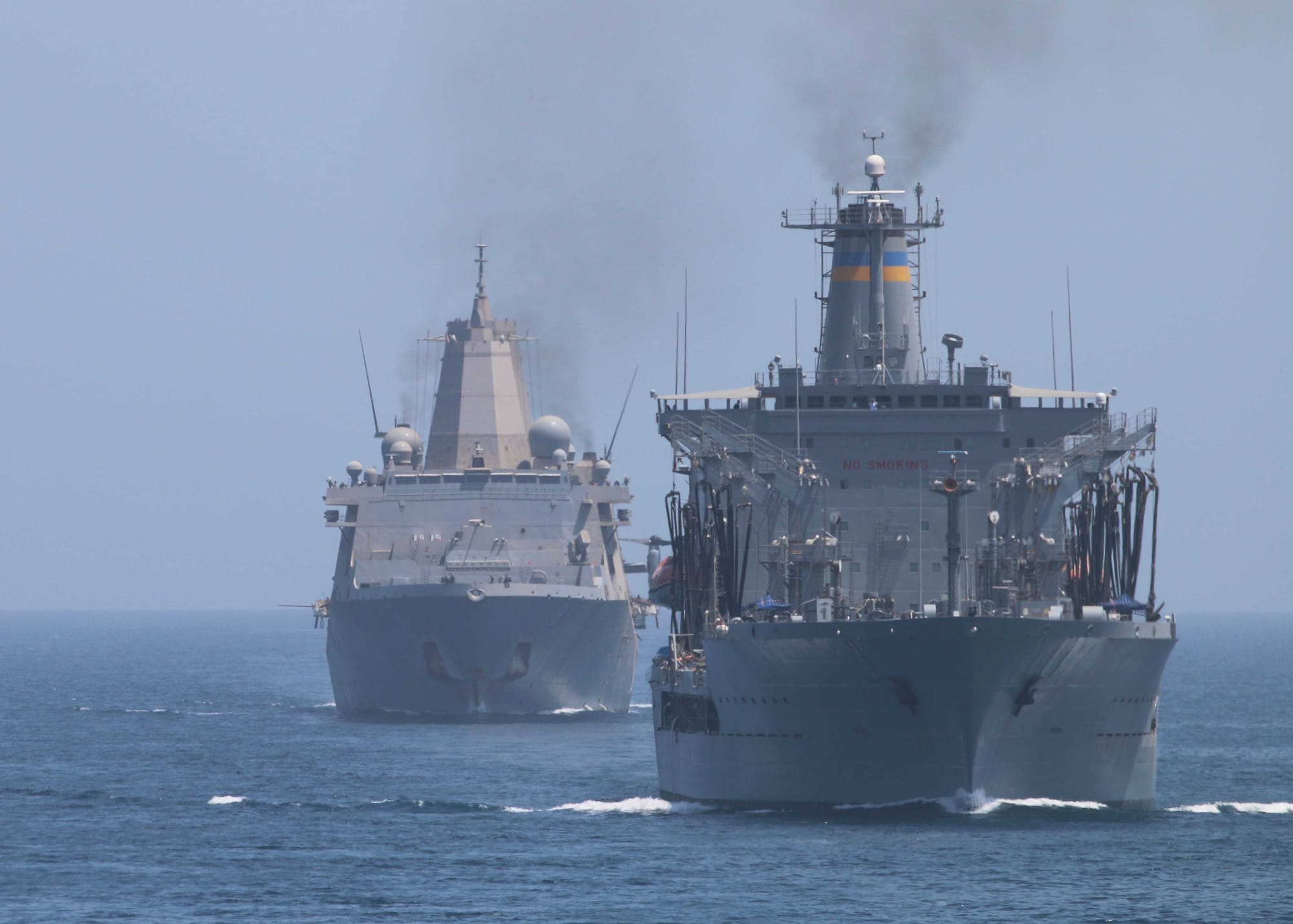
160626-N-GP524-530
STRAIT OF HORMUZ (June 26, 2016) The Military Sealift Command fleet replenishment oiler USNS John Ericsson (T-AO 194), right, and the San Antonio-class amphibious transport dock USS New Orleans (LPD 19) transit the Strait of Hormuz escorted by USS Stout (DDG 55). Stout, an Arleigh Burke class guided-missile destroyer deployed as part of the Eisenhower Carrier Strike Group, is supporting maritime security operations and theater security operations in the U.S. 5th Fleet area of operations. (U.S. Navy photo by Mass Communication Specialist 3rd Class Bill Dodge/Released)

Unit: Navy Media Content Services
DVIDS Tags: SAR; Search and Rescue; formation; ocean; transit; "Bahrain; RAS; GQ; general quarters; Arleigh Burke-class; USNS John Ericsson"; America; underway; CIWS; 6th Fleet; guided-missile destroyer; RIA; Manama"; forward deployed; Memorial Day; USS Stout (DDG 55); ship; SUEZ CANAL; Navy; COMREL; Sailor; community relations; destroyer; replenishment-at-sea; U.S. Navy; 5th Fleet; deployment; MC; USS New Orleans; Stout; USS Stout; DDG 55; Lt. Michael Murphy; NMCS; DVIDS Bulk Import; Mass Communication Specialist 3rd Class Bill Dodge; MC3 Bill Dodge; Murph Challenge; ARGONAUT 2016; Sailors giving back
Representative image for context; not directly related to the specific event in this article. License: Public domain. Source: Wikimedia Commons.

He said the United States had protected these allies from external threats, but that “they were not enthusiastic,” adding that the level of enthusiasm is important to him as the alliance faces pressure over burden-sharing.

The remarks followed a social media post on the 14th in which Trump called on five countries—Korea, Japan, the United Kingdom, France, and China—to dispatch warships to Hormuz.

Iran has sought to block Hormuz in response to U.S.-Israeli military actions, a move that has driven up global oil prices. Roughly 20% of global crude shipments pass through Hormuz, underscoring the strait’s strategic significance.
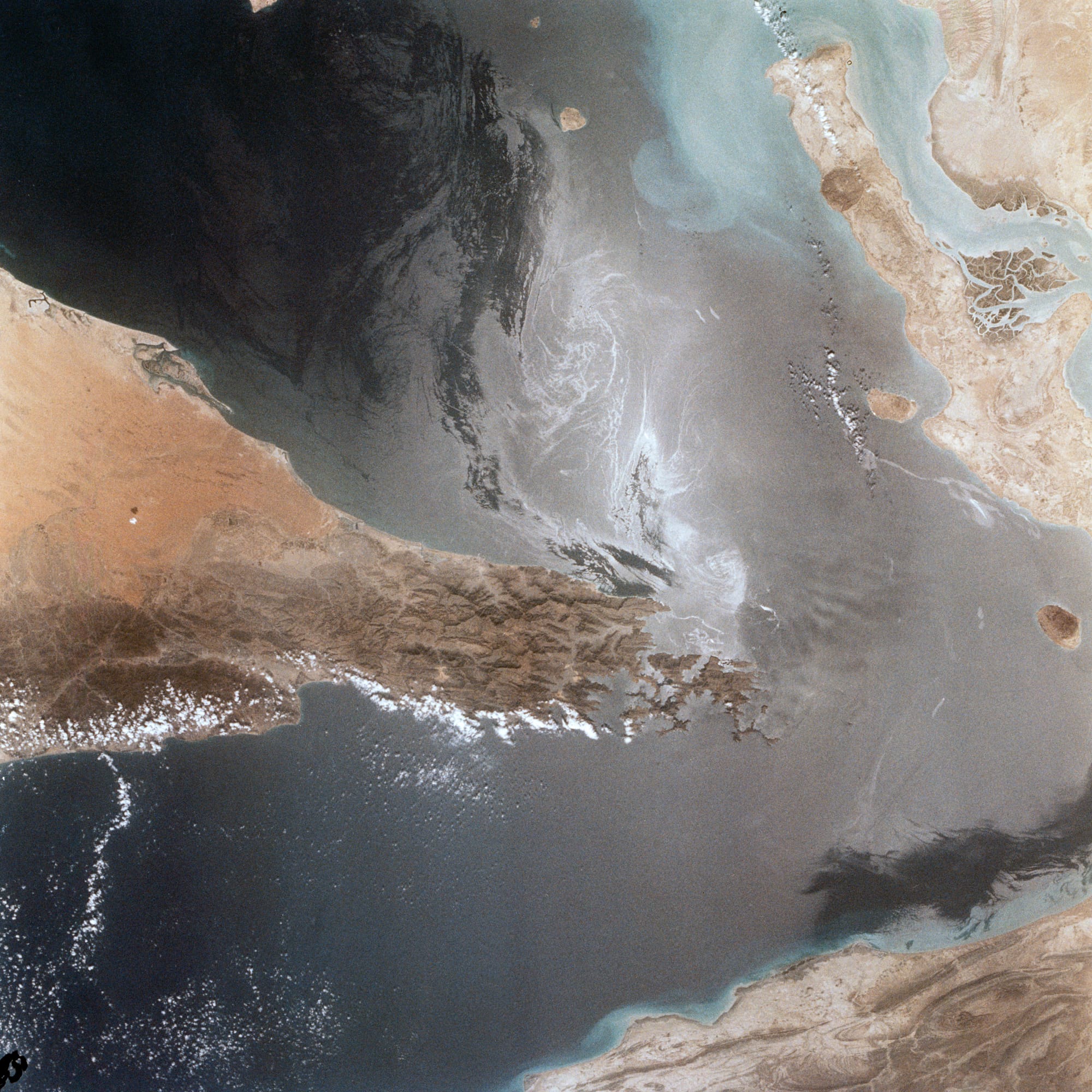
Portions of Oman, The United Arab Emirates and Iran are seen at the Strait of Hormuz (26.0N, 56.0E) in this view. A number of ship wakes can be seen in the area of the strait. Sunglint in the Persian Gulf to the northwest, accentuates the complex currents and oil slicks, seen as dark toned blue streaks on the surface. Qeshm Island, just off the coast of Iran, can be seen on the edge of the photo.
Representative image for context; not directly related to the specific event in this article. License: Public domain. Source: Wikimedia Commons.

The Hormuz Strait links the Persian Gulf with the Gulf of Oman and is a critical chokepoint for world energy flows. The United States maintains a substantial naval presence in the region, including the 5th Fleet based in Bahrain, to safeguard these shipping lanes.

For U.S. readers, the issue matters because disruptions at Hormuz can quickly ripple through energy markets, affecting gasoline prices and inflation, while testing America’s alliances and defense commitments in a volatile region. The broader implications extend to global supply chains and energy security that touch markets and policy from Europe to Asia.

Subscribe to Journal of Korea

Don’t miss out on the latest issues. Sign up now to get access to the library of members-only issues.
jamie@example.com
Subscribe