Trump urges South Korea to send warships to guard Hormuz Strait
U.S. President Donald Trump on Thursday urged five countries, including South Korea, to send warships to guard the Hormuz Strait as Iran’s blockade of ships continues amid the ongoing conflict between the United States and Israel on Iran. The appeal appeared in posts on Truth Social.
Trump said that many nations, especially those affected by Iran’s attempts to block the strait, should work with the United States to keep the route open and secure for maritime traffic. He framed this as a coalition effort to prevent disruption of global oil shipments tied to the Hormuz corridor.
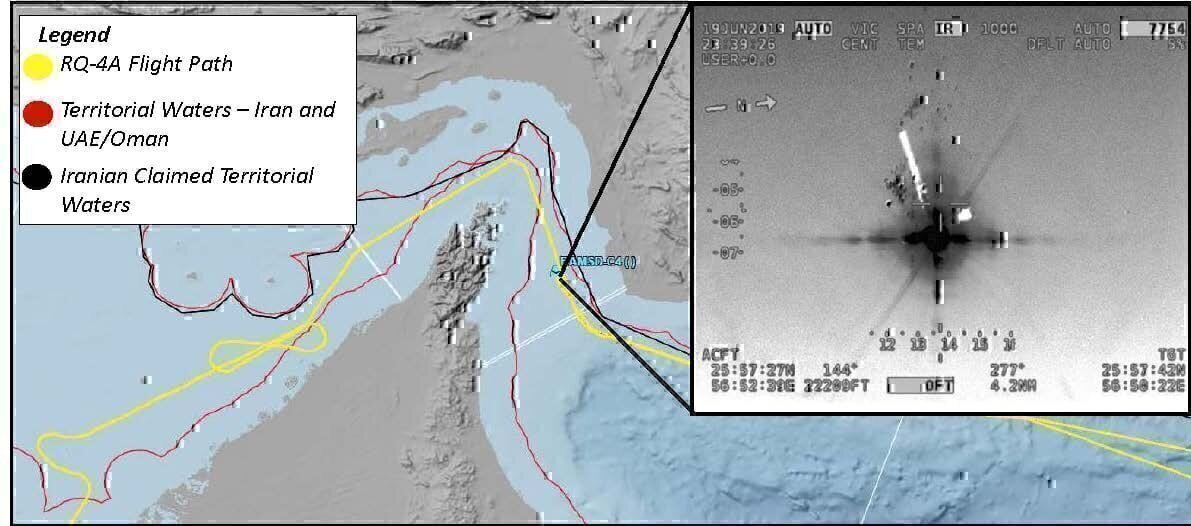
The president asserted that the United States has “destroyed” Iran’s military capability, while warning that Tehran could still threaten the strait through drones, mines or short-range missiles. He urged leaders of other countries—specifically naming China, France, Japan, South Korea and the United Kingdom, among others—to deploy naval ships to protect the passage, noting the qualifier “ideally.”
This marks the first time Trump has publicly called for a third country to participate in anti-Iran military operations, rather than relying solely on partners such as Israel. He added that the United States would conduct strikes on Iran’s coast and continue targeting Iranian vessels at sea, with the aim of reopening and securing the strait.
The Hormuz Strait is a critical bottleneck through which a large share of Middle East oil passes, connecting the Persian Gulf to the Gulf of Oman and onward to global markets. Disruptions there can ripple through energy prices and supply chains worldwide, making allied naval presence a matter of broad international interest, not just regional security.
![Summary
The "Battle Copper Prints" are a series of prints from copper engravings dating from the second half of the 18th century. They were commissioned by the Qianlong emperor of the Qing dynasty (1644--1911), who ruled from 1735 to 1796. They depict his military campaigns in China's inner provinces and along the country's frontiers. The master illustrations for the engravings were large paintings done by European missionary artists employed at that time at the court in Beijing. These artists were Italian Jesuit Giuseppe Castiglione (1688--1766), French Jesuit Jean-Denis Attiret (1702--68), Bohemian Jesuit Ignatius Sichelbarth (1708--80), and the Italian Augustinian missionary, Jean-Damascène Sallusti (d. 1781). The engravings of the first set of 16 paintings were not produced in China but were executed in Paris, at that time home to the best European artisans working in this technique. The emperor even decreed that the work emulate the style of the Augsburg copper engraver Georg Philipp Rugendas the Elder (1666--1742), whose work he knew. Small-scale copies of the paintings by Castiglione and his Beijing colleagues were sent to Paris to be transferred on to copperplates, printed, and then sent back to China, along with the plates and prints. Later sets of engravings were executed in Peking by Chinese apprentices of the Jesuits and differ markedly in style and elaborateness from those of the Paris series. Qianlong's battle copper prints were just one of the means the Manchu emperor employed to document his campaigns of military expansion and suppression of regional unrest. They served to glorify his rule and to exert ideological control over Chinese historiography. In the history of Chinese art, copper-print engraving remained an episode. Seen in their political context, the Qianlong prints represent a distinct and exceptional pictorial genre and are telling examples of the self-dramatization of imperial state power. The East Asia Department of the Berlin State Library holds a set of five series with a total of 64 prints. This is one of 12 prints depicting the campaign against Taiwan of 1787--88, in which Chinese troops led by General Fukang'an defeated an armed insurrection in Taiwan against the Qing government.
Created / Published
Beijing, China : The Chinese Imperial Court, [1787 to 1788]
Subject Headings
- China--Taiwan
- 1787 to 1788
- Battles
- Qing dynasty, 1644-1911
Notes
- Title devised, in English, by Library staff.
- Original resource extent: 49.7 centimeters high and 86.6 centimeters wide; copper plate prints.
- Original resource at: Berlin State Library - Prussian Cultural Heritage Foundation.
- Content in Chinese.
- Description based on data extracted from World Digital Library, which may be extracted from partner institutions.](https://journalkor.site/content/images/2026/03/02_1787_Crossing_the_Taiwan_Strait_and_returning_in_triumph-1.jpg)
The White House has signaled a willingness to coordinate with allies to keep oil shipments flowing, while stressing that any action would involve a coalition approach rather than unilateral U.S. deployment alone. For U.S. readers, the episode highlights how American energy security, alliance dynamics in Asia and Europe, and global oil markets could be affected by shifts in Middle East risk.
European governments were already signaling interest in coordinated responses. French President Emmanuel Macron spoke about preparing a defensive guard mission if needed, and Britain’s defense ministry said London was discussing options with allies to ensure safe ship operations in the region. The statements underscore growing multinational attention to securing a vital shipping lane and the potential for broader coalition actions.