Korea braces for hazy air as PM2.5 rises amid dust

Today is a holiday in Korea, and a spring day with a wide temperature swing is on tap. The sky will be mostly cloudy and air quality is expected to worsen as NW winds bring fine dust from outside the region. Central Western Korea and Jeollabuk-do are forecast to experience PM2.5 levels in the “bad” range on average, with dust concentrations rising in other areas later in the afternoon. People outdoors are advised to wear a mask.

Cloud cover will prevail nationwide, with some locales seeing light drizzle. The East Sea (Sea of Japan) coast and Jeju Island coast are expected to contend with strong coastal swells, so coastal safety should be prioritized to prevent weather-related incidents.
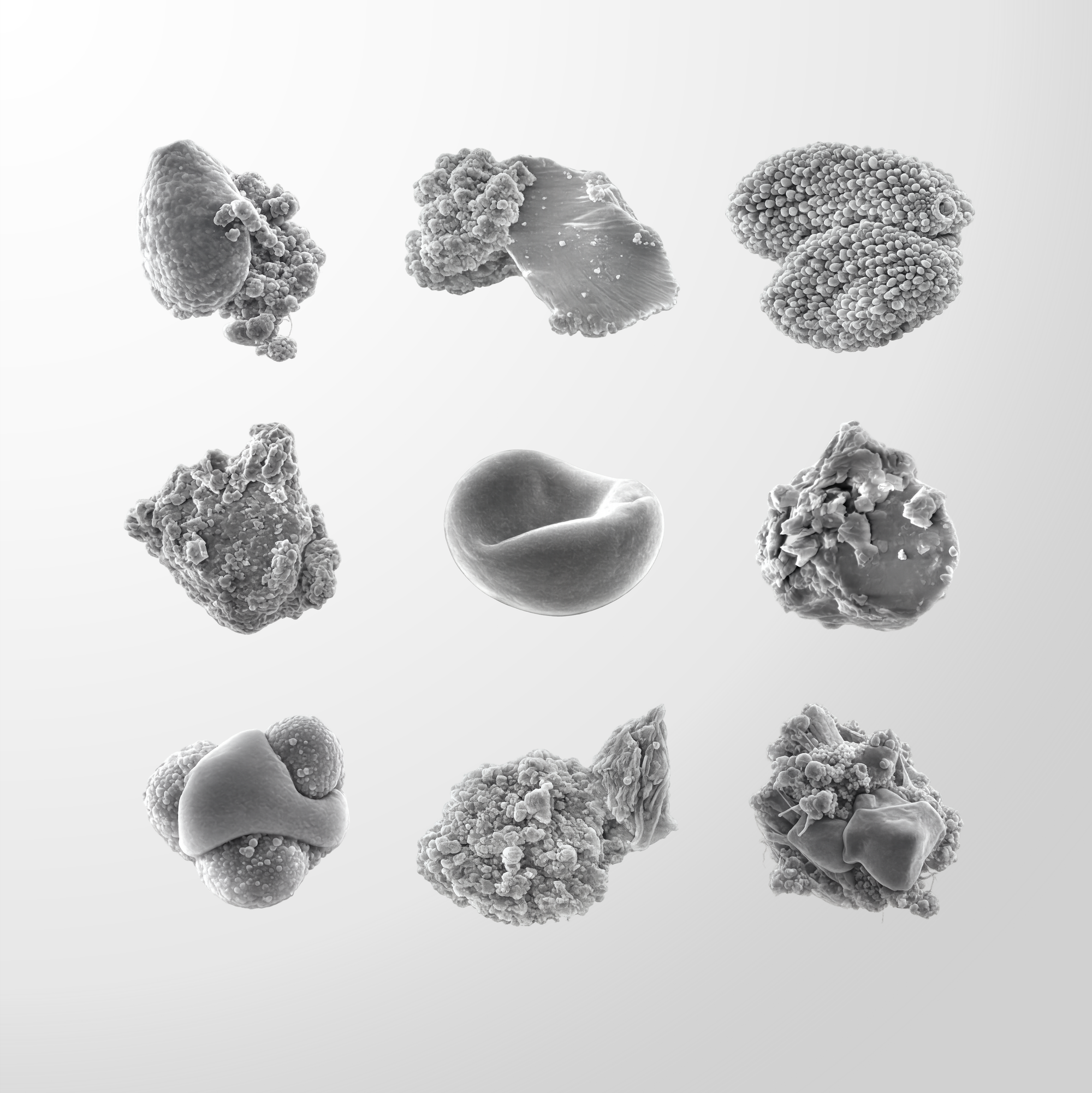
This image set shows micrographs of airborne particulate matter collected in Astana, Kazakhstan. Particulate matter consists of microscopic solid and liquid particles suspended in the air. These particles originate from both natural sources and human activities, such as traffic, heating, and industrial processes. Due to their small size, particulate matter can be inhaled deep into the lungs and may contain harmful substances, contributing to respiratory and cardiovascular health problems.
Technical Methodology and Equipment 
The PM sampling campaign: 
The sampling campaign was conducted from October 2021 to June 2023, covering a total duration of 194 days of sample collection. PM was collected using a Partisol 2025i-D Dichotomous Sequential Air Sampler (Thermo Fisher Scientific Inc., San Jose, CA, USA), which simultaneously captures both fine (PM2.5) and coarse (PM2.5–10) fractions. The sampler installation was performed according to U.S. EPA 40 CFR Part 58, Appendix D and Appendix E siting criteria. The virtual impactor of the air sampler separated the airflow to maintain a steady flow rate of 15 L/min and 1.67 L/min for PM2.5 and PM2.5–10, respectively. Samples were collected on 47 mm polytetrafluoroethylene (PTFE) filters (2 µm pore size) over 24 h periods during a two-year campaign, yielding 194 samples for each PM fraction. Filters were pre- and post-conditioned in a controlled environment (30–40% RH, 20–23 °C) for at least 24 h and stored at 4 °C in Petri dishes prior to analysis. Gravimetric analysis was performed using a RadWag XA 220.3Y (RADWAG, Radom, Poland). Analytical balance and PM mass concentrations were calculated in μg·m−3.
Morphological Characterization of PM:
Fine particulate matter (PM2.5) (n = 10) and coarse particulate matter (PM2.5–10) (n = 10) samples collected during July and January were selected to investigate seasonal (summer–winter) variations in particle morphology, potential dominant sources, and the impact of the heating season. Each filter was sectioned into 1 mm2 fragments, mounted on carbon tape, and coated with a 15 nm Au layer, using a Q150T sputter coater to enhance conductivity. Morphological characterization was conducted using a field emission scanning electron microscope (FE-SEM, ZEISS Crossbeam 540 (Carl Zeiss AG, Oberkochen, Germany) equipped with ORS Dragonfly Pro 2021.3 software. Analyses were performed under high-vacuum conditions (10−5 mbar), with a working distance of 3.6 mm, an accelerating voltage of 5 kV, a scan speed of 3, and a probe current of 117 pA. These settings enabled the detection of particulate matter with diameters as small as <100 nm.
Scientific Value:
1) Provides direct morphological evidence of PM2.5 and PM2.5–10 particle types in Astana, Kazakhstan, where such data are currently very limited.
2) Confirms strong seasonal contrasts in emission sources, with combustion-related particles dominating in winter and dust- and traffic-related particles prevailing in summer.
3) Enables source identification through characteristic particle morphologies (soot aggregates, coal fly ash, mineral dust, biological particles), complementing chemical and receptor-model analyses.
4) Reveals particle size and shape features relevant to inhalation behavior and respiratory deposition.
5) Supports assessment of potential health risks associated with different particle morphologies.
6) Establishes baseline microscopic evidence for urban particulate matter in Central Asia, supporting future air quality and health-impact studies.
Co-authors of the scientific article in which these micrographs were published:

Akmaral Agibayeva, Aiganym Kumisbek, Aslan Nauyryzbay, Egemen Avcu, Kuanysh Zhalgasbayev, Ferhat Karaca, and Mert Guney.
Representative image for context; not directly related to the specific event in this article. License: CC BY 4.0. Source: Wikimedia Commons.

In terms of temperatures, Seoul begins the day around 6.4°C, higher than yesterday’s morning low. Daytime highs are forecast to reach about 12°C in Seoul and around 13°C in Daegu and Gwangju.

The air-quality outlook points to persistent haze, especially across central Korea, through mid-next week. The more southern and Chungcheong regions are likely to see continued dust buildup in the afternoons, with rain expected in Chungcheong and southern areas on Wednesday.
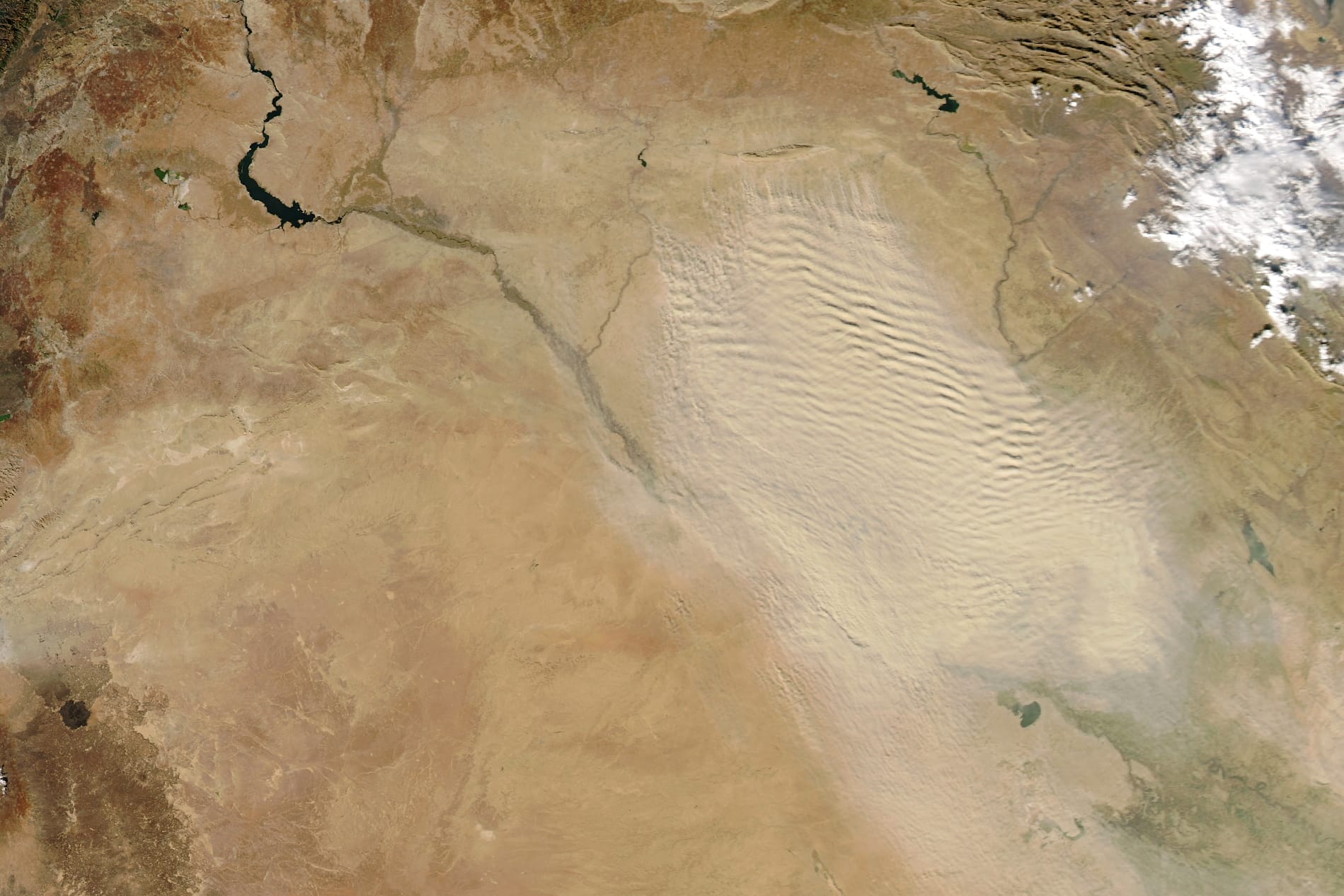
A dust storm swept through the Tigris–Euphrates river basin in mid-December 2024. Blowing hundreds of kilometers from eastern Syria and northern Iraq toward the Persian Gulf, the plume degraded visibility and caused hazardous air quality in several cities, including Baghdad, home to nearly 8 million people.
The dense dust cloud obscured the landscape in this image acquired by the MODIS (Moderate Resolution Imaging Spectroradiometer) on NASA’s Aqua satellite on December 14. Notice how the dust has organized into linear bands. The pattern is likely due to atmospheric gravity waves, caused by the rise and fall of an air mass that has been disturbed, for example, by flowing over topography.
Dust choked the air in the Iraqi capital of Baghdad on December 14. The Associated Press published a video that day showing blowing sand and low visibility in the city. Levels of fine particulate matter (PM2.5) exceeded 400 micrograms per cubic meter, according to data reported by IQAir. The World Health Organization classifies concentrations above 250 micrograms per cubic meter as hazardous, putting the public at high risk of adverse health effects.
The plume traveled farther toward the Persian Gulf and shrouded the city of Abadan in Iran, southeast of this scene, on December 15. Air quality there also reached hazardous levels, schools and public services were closed, and flights were suspended as visibility dropped, according to media reports.
The Tigris–Euphrates river basin is the primary non-desert source of dust in the Middle East and a very active area for dust events. They are most common during the drier summer months, brought on by the shamal—strong winds that blow from the north-northwest. However, the shamal winds also blow in winter, albeit in shorter and less intense incidents, with gusts reaching up to 70 kilometers (43 miles) per hour.
Dry conditions make it more likely that winds can loft eroded material into the air and transport it downwind. In a 2023 study, researchers analyzed data from the GRACE (Gravity Recovery and Climate Experiment) satellites and found a declining trend in terrestrial water storage in the Tigris–Euphrates river basin throughout the mission’s duration, from 2002 to 2017. Combining those observations with models of land surface processes, they attributed about 60 percent of the trend to climate variability and about 40 percent to direct human actions such as groundwater pumping and surface water withdrawal.

NASA Earth Observatory image by Michala Garrison, using MODIS data from NASA EOSDIS LANCE and GIBS/Worldview. Story by Lindsey Doermann.
Representative image for context; not directly related to the specific event in this article. License: Public domain. Source: Wikimedia Commons.

For U.S. readers, the Korea forecast highlights how regional air-pollution events in East Asia can affect health advisories, outdoor activity, and business operations tied to Korean manufacturing and supply chains. Large economies often monitor these conditions because labor, outdoor testing, and logistics can be disrupted by hazy air and intermittent rain.

The forecast caller is Park Se-ryeom, a weather presenter who signs off the report. The public should stay updated on the latest conditions, especially if you are in central Korea or planning coastal activities along the East Sea and Jeju coast.

Subscribe to Journal of Korea

Don’t miss out on the latest issues. Sign up now to get access to the library of members-only issues.
jamie@example.com
Subscribe