Trump Urges South Korea to Deploy Warships to Strait of Hormuz
Former U.S. President Donald Trump has urged five countries, including South Korea, China, Japan, France, and the United Kingdom, to dispatch warships to the Hormuz Strait, in a message posted on Truth Social on the 14th.
In the post, Trump said that countries affected by Iran’s attempts to close the strait would “send ships with the United States to keep the strait open and safe.” He framed the move as a joint effort to protect global shipping routes from disruption.
Trump further asserted that “we (the United States and Israel) have already destroyed Iran’s military capability 100%,” but warned that “even if they are heavily defeated, sending one or two drones, dropping mines, or launching short-range missiles is easy.” He called on China, France, Japan, Korea, the United Kingdom, and other nations affected by the alleged constraint to join in sending vessels so that the Strait would no longer be threatened by a leadership change in Iran.
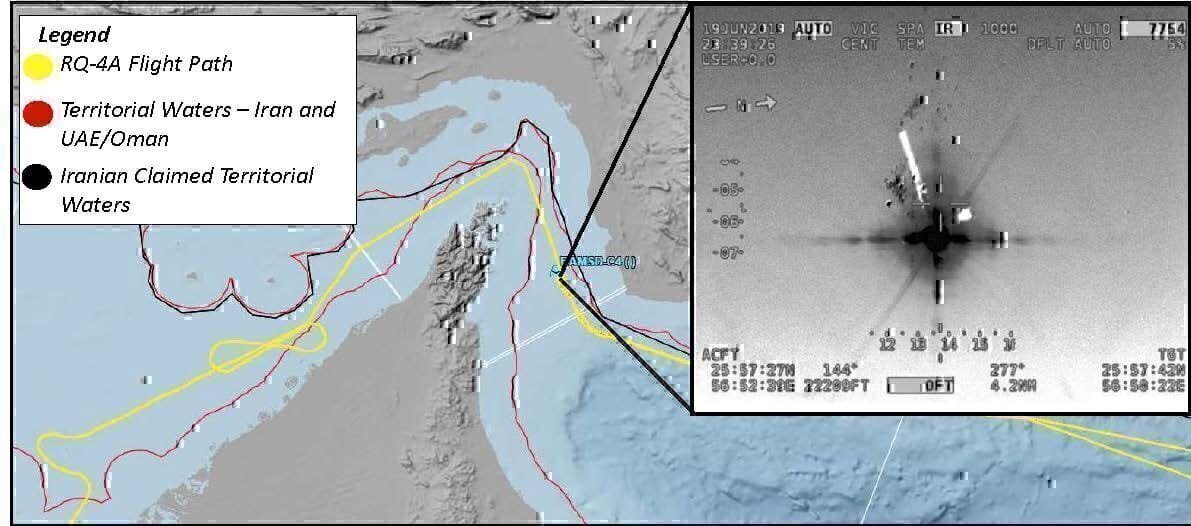
The Hormuz Strait, a narrow passage between the Persian Gulf and the Gulf of Oman, is a critical chokepoint for global energy shipments. A disruption there could affect crude-oil flows and roil energy markets worldwide, with spillover effects on prices and supply chains.
The United States has long maintained a naval presence in the Gulf to safeguard maritime security and freedom of navigation. The U.S. Fifth Fleet operates in the region from bases in Bahrain as part of ongoing security operations, alongside allied and partner navies that routinely patrol near the Strait.
![Summary
The "Battle Copper Prints" are a series of prints from copper engravings dating from the second half of the 18th century. They were commissioned by the Qianlong emperor of the Qing dynasty (1644--1911), who ruled from 1735 to 1796. They depict his military campaigns in China's inner provinces and along the country's frontiers. The master illustrations for the engravings were large paintings done by European missionary artists employed at that time at the court in Beijing. These artists were Italian Jesuit Giuseppe Castiglione (1688--1766), French Jesuit Jean-Denis Attiret (1702--68), Bohemian Jesuit Ignatius Sichelbarth (1708--80), and the Italian Augustinian missionary, Jean-Damascène Sallusti (d. 1781). The engravings of the first set of 16 paintings were not produced in China but were executed in Paris, at that time home to the best European artisans working in this technique. The emperor even decreed that the work emulate the style of the Augsburg copper engraver Georg Philipp Rugendas the Elder (1666--1742), whose work he knew. Small-scale copies of the paintings by Castiglione and his Beijing colleagues were sent to Paris to be transferred on to copperplates, printed, and then sent back to China, along with the plates and prints. Later sets of engravings were executed in Peking by Chinese apprentices of the Jesuits and differ markedly in style and elaborateness from those of the Paris series. Qianlong's battle copper prints were just one of the means the Manchu emperor employed to document his campaigns of military expansion and suppression of regional unrest. They served to glorify his rule and to exert ideological control over Chinese historiography. In the history of Chinese art, copper-print engraving remained an episode. Seen in their political context, the Qianlong prints represent a distinct and exceptional pictorial genre and are telling examples of the self-dramatization of imperial state power. The East Asia Department of the Berlin State Library holds a set of five series with a total of 64 prints. This is one of 12 prints depicting the campaign against Taiwan of 1787--88, in which Chinese troops led by General Fukang'an defeated an armed insurrection in Taiwan against the Qing government.
Created / Published
Beijing, China : The Chinese Imperial Court, [1787 to 1788]
Subject Headings
- China--Taiwan
- 1787 to 1788
- Battles
- Qing dynasty, 1644-1911
Notes
- Title devised, in English, by Library staff.
- Original resource extent: 49.7 centimeters high and 86.6 centimeters wide; copper plate prints.
- Original resource at: Berlin State Library - Prussian Cultural Heritage Foundation.
- Content in Chinese.
- Description based on data extracted from World Digital Library, which may be extracted from partner institutions.](https://journalkor.site/content/images/2026/03/02_1787_Crossing_the_Taiwan_Strait_and_returning_in_triumph.jpg)
For U.S. readers, the episode matters because any threat to Hormuz would carry implications for energy affordability and reliability, global markets, and defense and alliance calculations in the Middle East. It also highlights ongoing debates over burden-sharing among Western allies and partners in deterring Iran and securing critical shipping lanes.
The statements were issued in a personal social-media post and did not appear to reflect an official U.S. government policy announcement. The exact reception of Trump’s call by the five named countries or other allies remains unclear.