Overseas dust worsens South Korea's air quality as unsettled weekend forecast threatens shipping
South Korea’s weekend and holiday forecast calls for a largely cloudy sky with notable fluctuations in temperature. Forecasters warn that air quality will deteriorate tomorrow as overseas ultrafine dust arrives, reducing visibility and making the air feel hazier than today.
In Paju, near Seoul, today’s sun felt pleasant, with daytime highs around 12 C in the region and Seoul reaching about 13 C. Tonight, temperatures are expected to dip back toward the upper single digits, around 9 C.
Tomorrow is projected to bring similar daytime temperatures, with Seoul around 13 C, Daejeon about 12 C, and Daegu near 15 C. Morning temperatures will start cool, with major cities waking to roughly 3 to 4 C.
Clouds are expected to remain, and the afternoon could bring light rain or snow on the mountains of Gangwon Province and the northeastern part of Gyeongsang. Hikers and travelers in these higher elevations should be prepared for unsettled conditions.
Air quality is a key concern. The combination of cloudy conditions and overseas fine dust is forecast to push air quality into the unhealthy range for many in Seoul and central-western regions, while southern areas may become hazier as the day progresses.
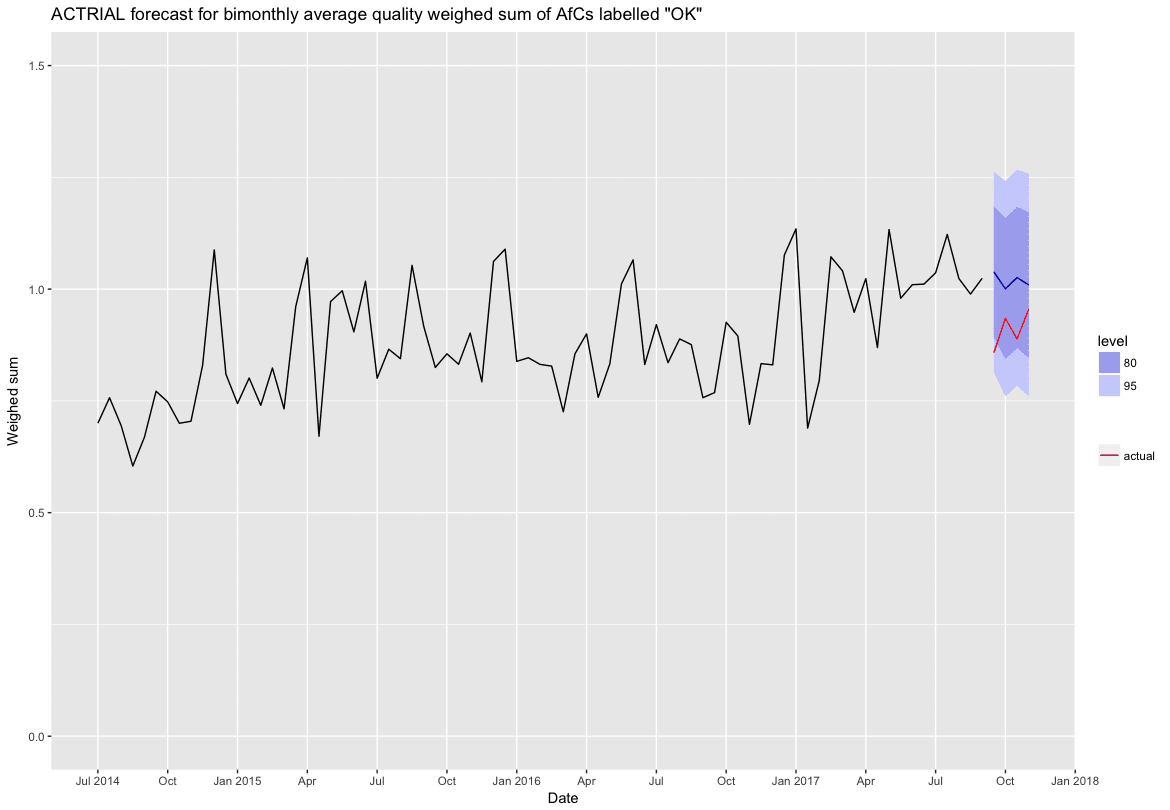
![Graph showing 80% and 95% confidence interval forecasts of the average weighed quality sum of non-autopatrolled article creations not flagged by ORES' draft quality model, for the first two months of ACTRIAL. The forecast uses an ARIMA(1,1,2)(1,0,0)[24] model built on a time series of bimonthly calculations. The true average weighed sum per bimonthly period is shown in red.](https://journalkor.site/content/images/2026/03/02_Actrial_forecast_quality_avg_weighed_sum_bimonthly.png)
Next week, an unsettled pattern persists, with rain forecast for Chungcheong and regions southward. Coastal conditions will also be notable: high waves are expected along the East Sea coast and around Jeju, with some waves reaching coastal breakwaters and potentially impacting coastal roads.
Why this matters for the United States: South Korea is a major hub for global electronics and automotive manufacturing, and weather disruptions can affect production schedules and logistics for American companies with supply chains in the region. Worsening air quality can influence health advisories and worker safety for multinational firms operating in Korea. In addition, volatile sea conditions around the Korean coast can affect shipping routes and port operations, with potential ripple effects on interim shipments and regional markets that feed into U.S. supply chains. The forecast also highlights ongoing cross-border air-quality concerns and climate-related planning that involve U.S.–Korea policy cooperation.
Context for readers: Seoul is the capital and largest city of South Korea; Paju is a city just northwest of Seoul known for green spaces like the Beokjoji Arboretum; the East Sea is the body of water to the country’s eastern coast, adjacent to Jeju island; Chungcheong refers to a central region of the mainland. The weather updates come from YTN’s weather team in Seoul.