South Korea Trials Unmanned Enforcement Pilot to Curb Sidewalk Riding by Two-Wheeled Vehicles

The Korean National Police Agency announced a pilot program deploying unmanned enforcement equipment to curb riding a two-wheeled vehicle on sidewalks where such use is prohibited. The system will begin trials on the 16th at five sites nationwide.

The devices are designed to read the license plates of vehicles traveling on sidewalks and to track and issue penalties for violations. The initial deployment locations are: the intersection in front of Yeongdeungpo Market in Seoul, the intersection in front of Sangbong Station, the Byeongyeong Intersection in Ulsan, the intersection in front of Suwon City Hall, and the intersection in front of Suwon KCC.
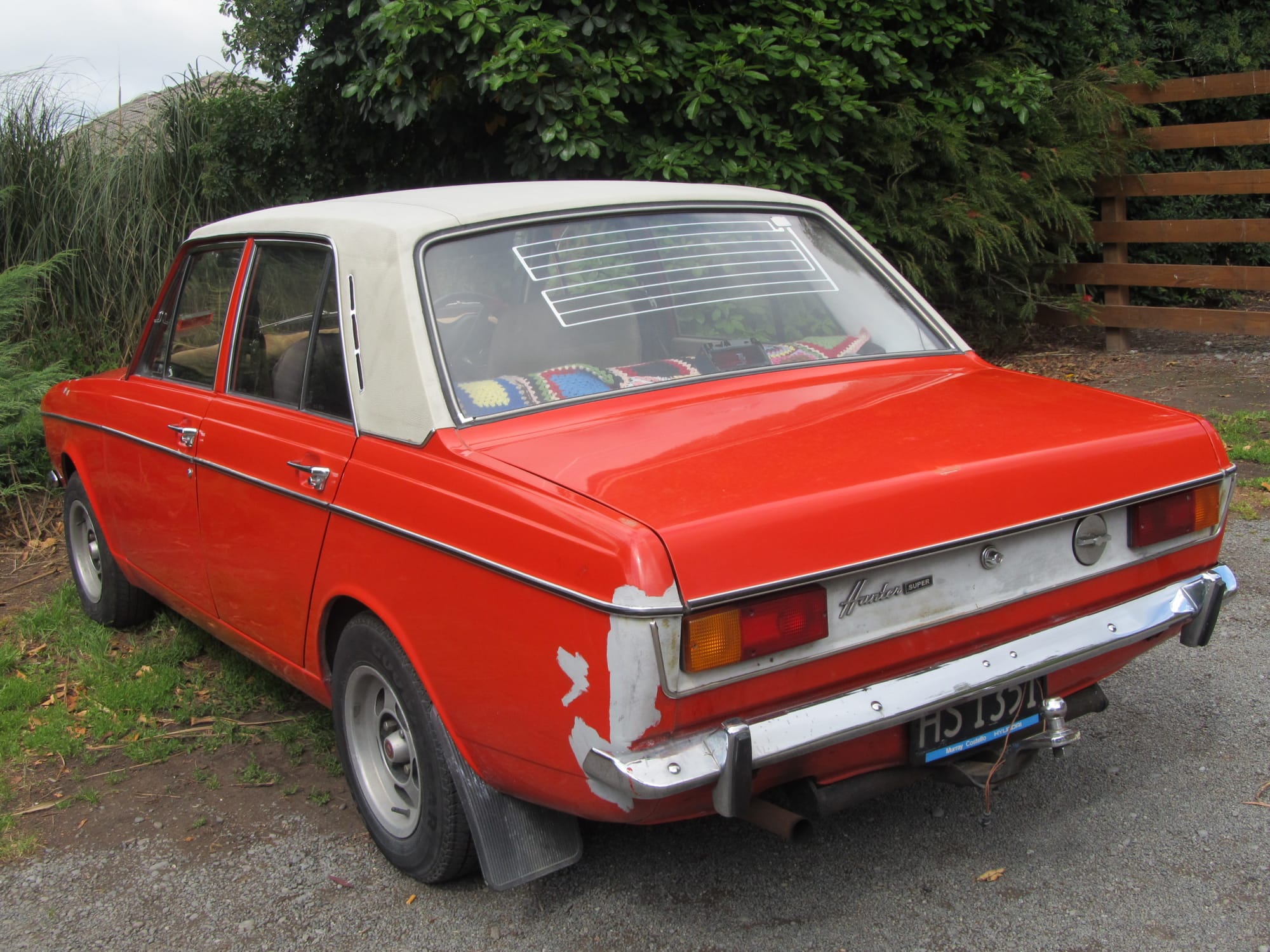
HS1351
The mystery vehicle! I had to give way to this at an intersection, and was quite shocked to see it piloted by an older lady! I followed it down the road to Riccarton Racecourse, where she turned and came into the car park - there was a rug sale on. Man, she was flooring this poor Hunter!

She then parked up and I waited for her to exit the vehicle and walk away, before taking a few shots (front and rear). I don't think I've ever been that determined to catch a vehicle before, ever... But just look at this! It's like a timewarp to 1983 - especially with that rug on the rear window sill. Long live the vinyl roof and heated rear window!
Representative image for context; not directly related to the specific event in this article. License: CC BY 2.0. Source: Wikimedia Commons.

These sites were chosen because they have a high volume of civil complaints and traffic accidents related to sidewalk use by vehicles such as motorcycles and others. The plan is to test how unmanned enforcement can complement existing traffic-safety measures.

To prevent an excessive growth of enforcement devices, officials described the new equipment as an enhancement to existing fixed systems, such as red-light and speed cameras, rather than a stand-alone expansion of surveillance.

Kim Ho-seung, head of the National Police Agency’s Safety and Traffic Bureau, urged riders of motorcycles and other two-wheeled vehicles to remember that dismounting effectively makes them pedestrians as well. He said the pilot will be expanded nationwide based on its results.
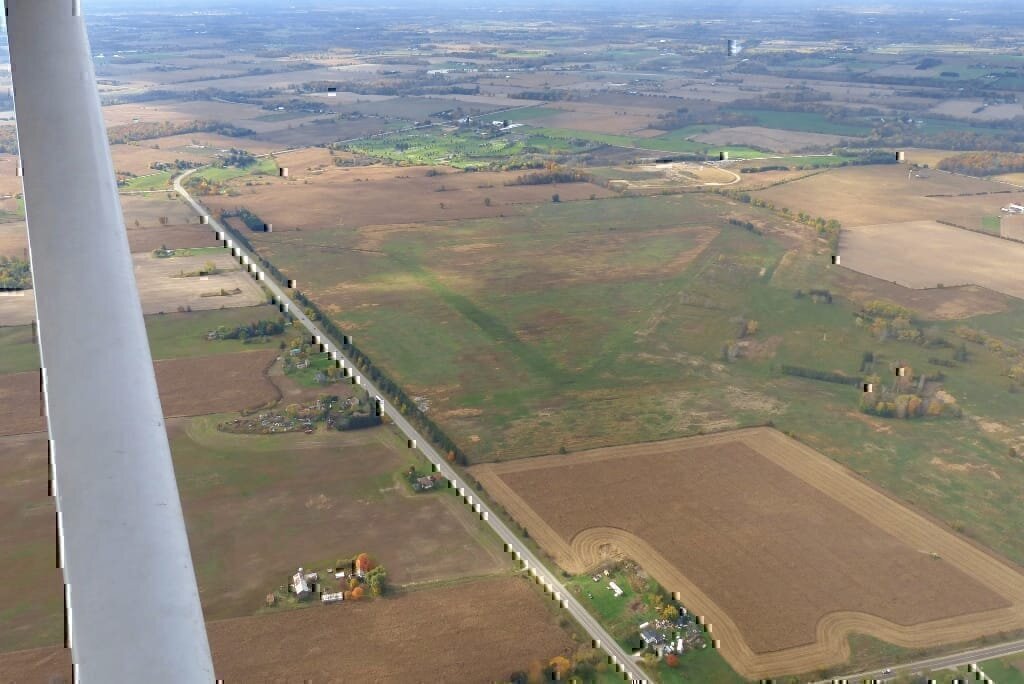
The World War II Royal Canadian Air Force airfield at Burtch, Ontario, Canada, as it was in November 2016.   The airfield was built in 1941 as part of the British Commonwealth Air Training Plan.   This view, from about 1,000' above ground level, has the camera pointing to southwest.
The triangle pattern of the runways is clearly visible, with the intersection of runway 25 (on the right) and 20 (left) at the centre of the frame.   Runway 30 is at the top of frame.
The hangar and camp area is marked by lines of trees at the right of frame.

This airfield was restored to farmland by the Government of Ontario between 2009 and 2015, and then given to a First Nations band in settlement of a land claim. The photograph was taken from the left front seat of Cessna 172 C-GBSL, from a height of 300 metres above ground level.  Pilot in command, in the right seat, was Aaron Webb. The white "pole" on the left side of the frame is the left wing strut.
Representative image for context; not directly related to the specific event in this article. License: CC BY-SA 4.0. Source: Wikimedia Commons.

This move reflects Korea’s broader use of automated traffic enforcement tools to enforce safety rules, particularly in busy urban areas. For U.S. readers, it highlights ongoing global debates over sidewalk safety, the deployment of license-plate recognition and other automated enforcement technologies, and their potential implications for privacy, policy, and cross-border technology markets.

The five-site pilot was reported by Yonhap News Agency, a major South Korean wire service.

Subscribe to Journal of Korea

Don’t miss out on the latest issues. Sign up now to get access to the library of members-only issues.
jamie@example.com
Subscribe