Oil tops $100 as Hormuz risk weighs on won amid Middle East tensions

Oil prices rose on growing Middle East concerns, and in Seoul’s currency market the won briefly weakened against the dollar, with the weekly close at 1,493.7 won per dollar as of 3:30 pm, up 12.5 won from the previous day. The rate opened near 1,490.6 and fluctuated around that level before finishing higher for the day.

In after-hours trading around 5:17 pm, the won–dollar rate pushed past the 1,500 mark, reaching 1,500.1 won per dollar. Earlier, the rate traded just above 1,490, before the late-session uptick. Intraday volatility continued to reflect shifting risk sentiment tied to Middle East developments.
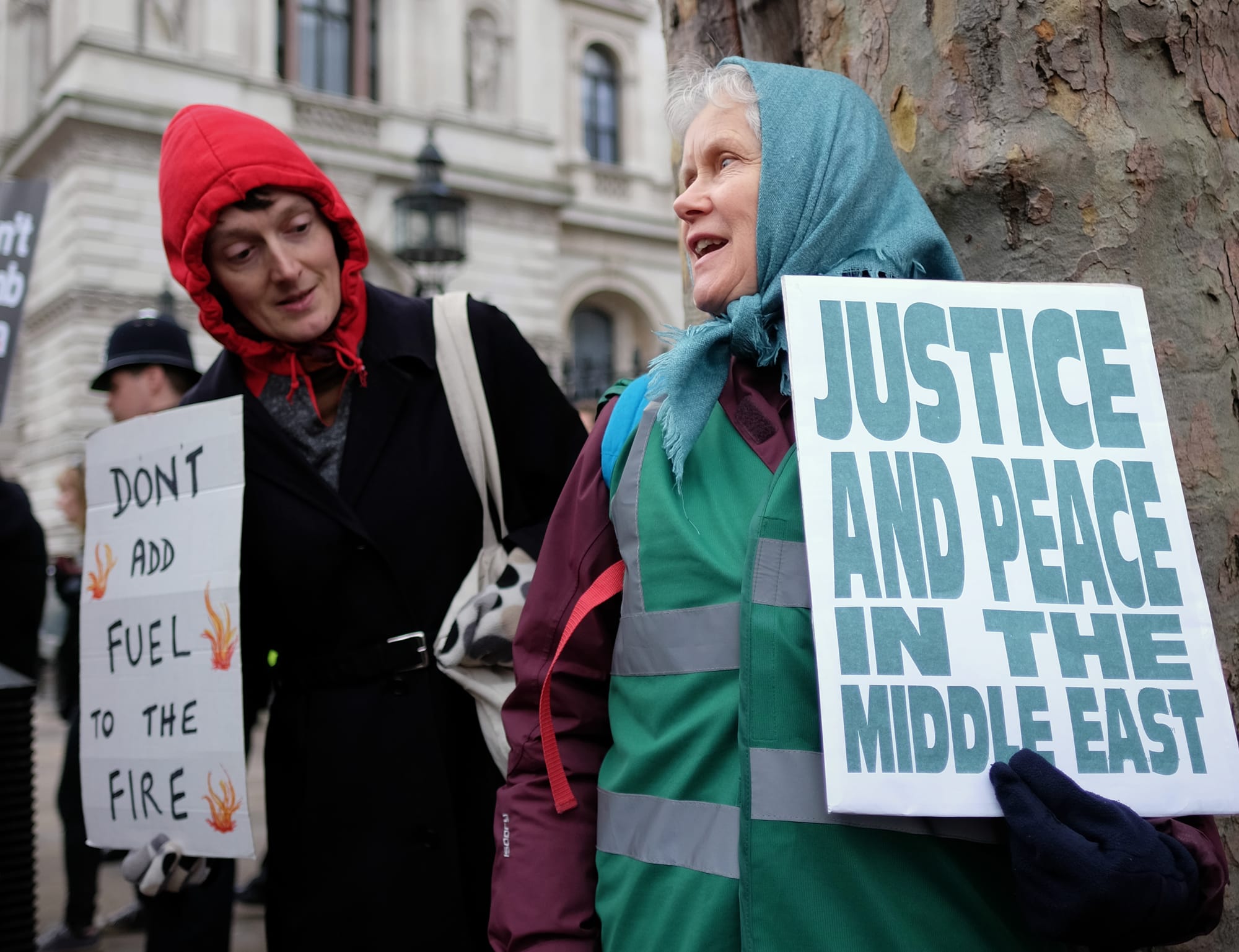
Two of the protesters who came to London today for the "Don't Bomb Syria" demo had traveled a long distance.  I think the woman on the right said she had come all the way from Scarborough.  She's chatting with another activist close to Downing Street.
Hundreds of demonstrators gathered in Whitehall to protest the government's determination to press ahead with air strikes on Syria.
Some protesters told me they feared that bombing Syria would only create more casualties which in turn would only help IS gain more local and international recruits to its' cause.  
There was also anger that at a time of unprecedented welfare cuts, Cameron was embarking the U.K. on action that would be highly costly to taxpayers even if also highly profitable to Britain's arms industry.  
A poll in this morning's Daily Mirror suggested the U.K's population is divided and without a convincing popular mandate for David' Cameron's plan to bomb IS positions in Syria.  
According to the paper:
"48% back British air raids on the extremists, contrasted with 30% who want the RAF to stay out of the fight, and 21% who don’t know. But an overwhelming majority - 59% believe sending Tornado warplanes into action over Syria will increase the risk of terrorists inflicting carnage in the UK."

If you need to contact me for any reason please email alisdare@gmail.com
Representative image for context; not directly related to the specific event in this article. License: CC BY-SA 2.0. Source: Wikimedia Commons.

The day’s moves came as the market weighed the longer-term risk of ongoing tensions in the region. In this context, investors have priced in potential disruptions to energy flows and supply, which tend to lift crude prices and influence currency markets across Asia.

According to the report, Iran’s Ayatollah Seyyed Mojtaba Khamenei was elected as the country’s new supreme leader, and in his first official statement he pledged retaliation against the United States and signaled a hardline response, including the possibility of blocking the Hormuz Strait. Following such rhetoric, international oil prices rose above $100 per barrel.
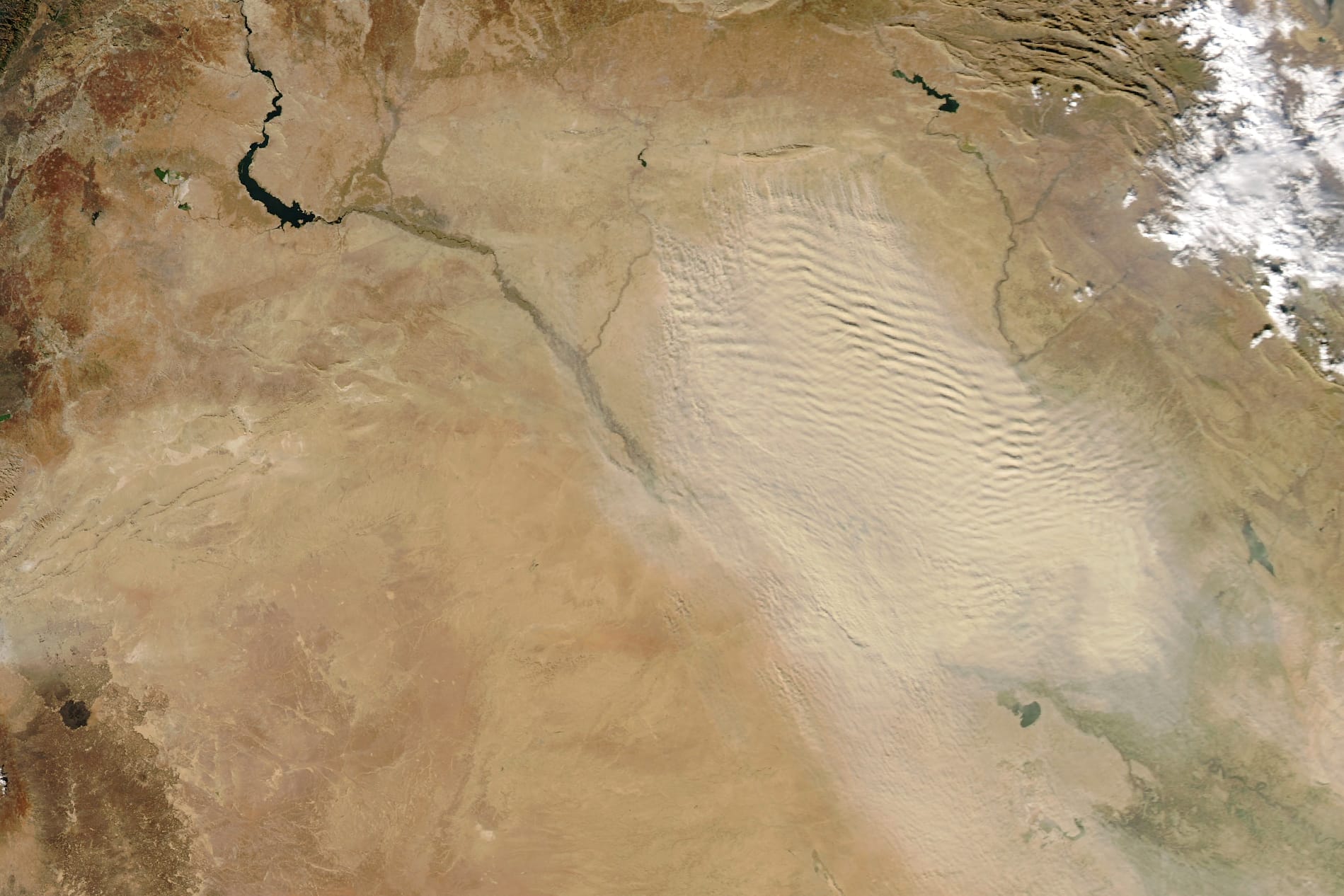
A dust storm swept through the Tigris–Euphrates river basin in mid-December 2024. Blowing hundreds of kilometers from eastern Syria and northern Iraq toward the Persian Gulf, the plume degraded visibility and caused hazardous air quality in several cities, including Baghdad, home to nearly 8 million people.
The dense dust cloud obscured the landscape in this image acquired by the MODIS (Moderate Resolution Imaging Spectroradiometer) on NASA’s Aqua satellite on December 14. Notice how the dust has organized into linear bands. The pattern is likely due to atmospheric gravity waves, caused by the rise and fall of an air mass that has been disturbed, for example, by flowing over topography.
Dust choked the air in the Iraqi capital of Baghdad on December 14. The Associated Press published a video that day showing blowing sand and low visibility in the city. Levels of fine particulate matter (PM2.5) exceeded 400 micrograms per cubic meter, according to data reported by IQAir. The World Health Organization classifies concentrations above 250 micrograms per cubic meter as hazardous, putting the public at high risk of adverse health effects.
The plume traveled farther toward the Persian Gulf and shrouded the city of Abadan in Iran, southeast of this scene, on December 15. Air quality there also reached hazardous levels, schools and public services were closed, and flights were suspended as visibility dropped, according to media reports.
The Tigris–Euphrates river basin is the primary non-desert source of dust in the Middle East and a very active area for dust events. They are most common during the drier summer months, brought on by the shamal—strong winds that blow from the north-northwest. However, the shamal winds also blow in winter, albeit in shorter and less intense incidents, with gusts reaching up to 70 kilometers (43 miles) per hour.
Dry conditions make it more likely that winds can loft eroded material into the air and transport it downwind. In a 2023 study, researchers analyzed data from the GRACE (Gravity Recovery and Climate Experiment) satellites and found a declining trend in terrestrial water storage in the Tigris–Euphrates river basin throughout the mission’s duration, from 2002 to 2017. Combining those observations with models of land surface processes, they attributed about 60 percent of the trend to climate variability and about 40 percent to direct human actions such as groundwater pumping and surface water withdrawal.

NASA Earth Observatory image by Michala Garrison, using MODIS data from NASA EOSDIS LANCE and GIBS/Worldview. Story by Lindsey Doermann.
Representative image for context; not directly related to the specific event in this article. License: Public domain. Source: Wikimedia Commons.

The Hormuz Strait is a critical global chokepoint linking the Persian Gulf to the open sea, through which a substantial share of the world’s crude shipments pass. Even a potential disruption to traffic through Hormuz can swiftly affect global energy prices and market risk sentiment.

For U.S. readers, the developments matter because higher oil prices feed into gasoline costs, inflation, and energy markets at large, with knock-on effects on consumer spending and corporate earnings. Currency volatility in Asia, including the won, can influence the costs of supply chains for American companies with ties to Korea, a major producer of semiconductors and electronics. The episode underscores how geopolitical risk in the Middle East can ripple through global markets, affecting energy security, trade, and investment decisions in the United States.

Subscribe to Journal of Korea

Don’t miss out on the latest issues. Sign up now to get access to the library of members-only issues.
jamie@example.com
Subscribe