Gwangju Biennale unveils 16th edition theme You Must Change Your Life

The 16th Gwangju Biennale unveiled its theme, “You Must Change Your Life,” at a press briefing in Seoul’s Centropolis on the 13th. The theme, announced ahead of the festival’s September 5 opening in Gwangju, is drawn from Rainer Maria Rilke’s 1908 poem Archaic Torso of Apollo, which calls on the viewer to make a decisive change in life.

Singapore-born artistic director Ho Chounien described the theme as rooted in transformation and history. He said that in Gwangju, change is not an abstract concept but living history, noting that the city’s long record of democratization continues to resonate with audiences around the world. He emphasized that the Biennale’s inquiry into transformation is anchored in memorial significance as well as contemporary practice.
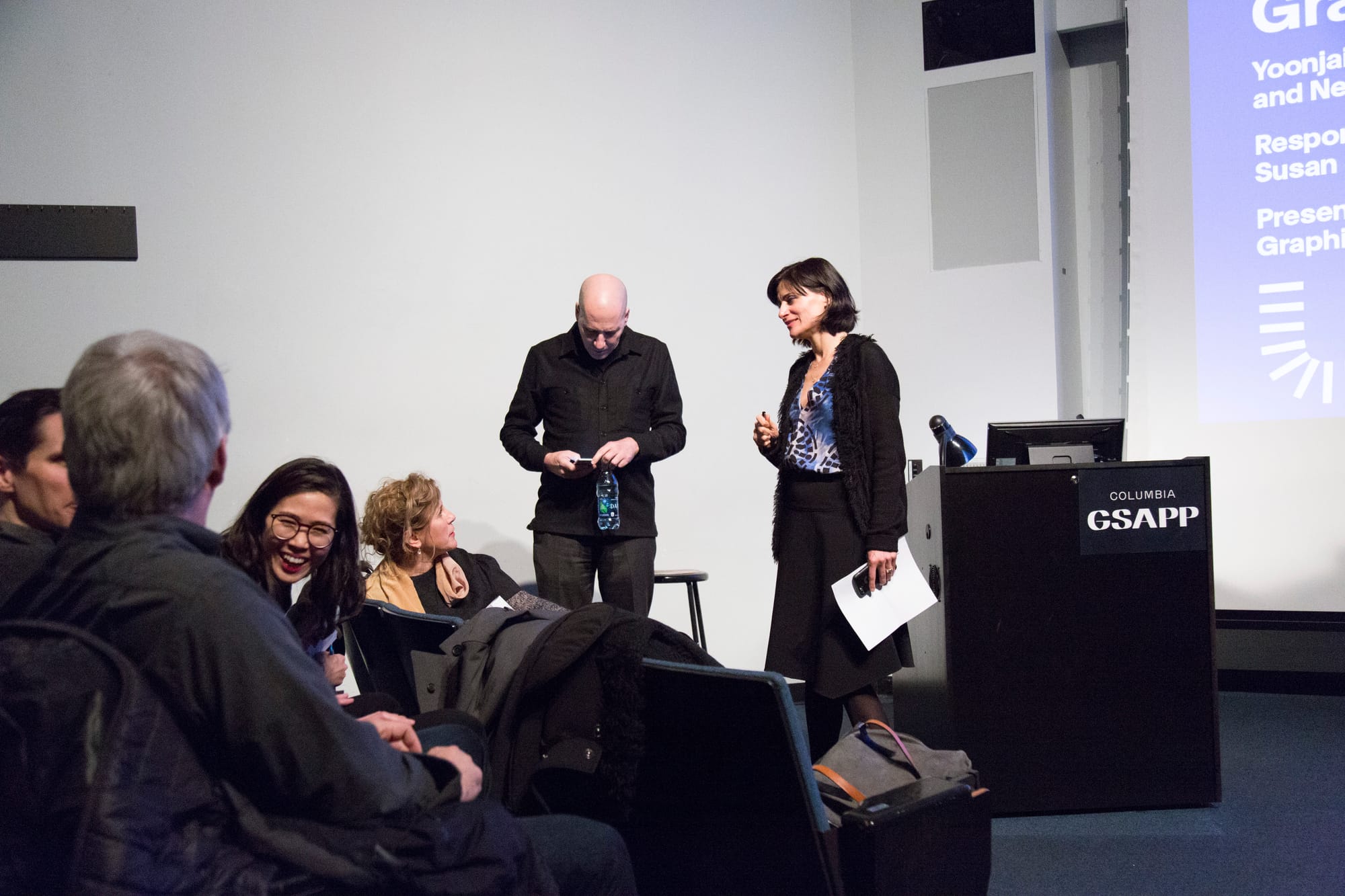
Yoonjai Choi, Glen Cummings, and Neil Donnelly
Response by Michael Rock and Susan Sellers
Presented as part of the Graphics Project, organized by Forrest Jessee
Hear three different designers present three different book projects. The conversation will focus on current trends in graphic design as well as the process of designing and editing books for different audiences and purposes. The presentations will be followed by a discussion between the designers led by Michael Rock and Susan Sellers.
Yoonjai Choi is a graphic designer and partner at Common Name.  Prior to co-founding the studio, Yoonjai held an art director position at New York design studio 2×4 for 5 years, where she worked with a variety of clients including LACMA, Prada, OMA, Bernard Tschumi, MoMA PS1, Rafael Moneo, and Barneys New York. 
Glen Cummings is a designer and partner at MTWTF.  MTWTF is a graphic design studio specializing in publications, environmental graphics and identity systems.  
Neil Donnelly is a graphic designer who often works with clients in architecture and art, including the Guggenheim, Yale University, Domus, Columbia University, The New York Times, Princeton Architectural Press, Storefront for Art and Architecture, and the Center for Urban Pedagogy. His work was included in the 2012 Brno Biennial of Graphic Design and has been featured at the Gwangju Design Biennale, the New Museum, the Museum of Arts and Design, and the Scottsdale Museum of Contemporary Art. 
Michael Rock and Susan Sellers are founders of studio 2x4. 2x4 is a global design consultancy headquartered in New York City with satellite studios in Beijing and Madrid. 2x4 focuses on brand strategy for cultural and commercial clients who value the power of design. Michael Rock is the Director of Graphical Architecture Studies at GSAPP. 

http://www.arch.columbia.edu
Representative image for context; not directly related to the specific event in this article. License: CC BY-SA 4.0. Source: Wikimedia Commons.

Ho Chounien also stressed that change must be sustained through repeated practice and that the Biennale will begin from an emphasis on artistic action. He indicated that the edition’s participating artists have been deliberately limited in number, with the director saying the show will feature the fewest artists in the festival’s history. By contrast, the 15th edition in 2024 included 73 artists from over 30 countries.

In keeping with that streamlined approach, the Biennale plans to present works by the participating artists as an interconnected sequence. Ho described the exhibition as evolving from individual points into a continuous line or “vector” that links related works by the same artist, rather than a collection of separate installations.

Community involvement features prominently this year. GB Commission artists Kwon Byung-joon and Park Chan-kyung will present Bulrim, a project that collects metal objects donated by people in Gwangju and Jeollanam-do to be forged into musical instruments for performances. The project cites traditional Korean communal practice known as geollip (걸립), in which villagers would contribute materials and be repaid with music or sutra, tying the artwork to local customs and history.
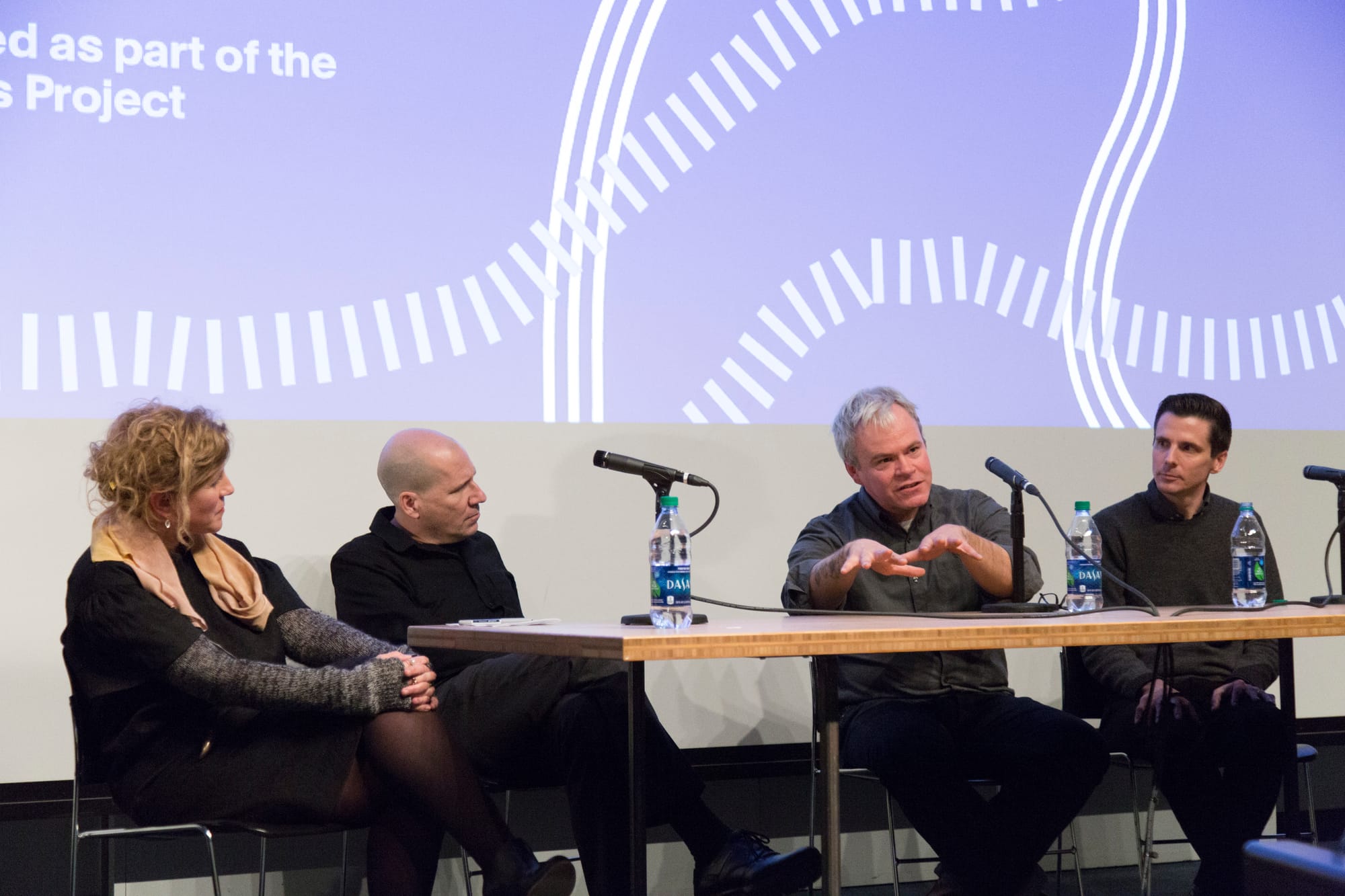
Yoonjai Choi, Glen Cummings, and Neil Donnelly
Response by Michael Rock and Susan Sellers
Presented as part of the Graphics Project, organized by Forrest Jessee
Hear three different designers present three different book projects. The conversation will focus on current trends in graphic design as well as the process of designing and editing books for different audiences and purposes. The presentations will be followed by a discussion between the designers led by Michael Rock and Susan Sellers.
Yoonjai Choi is a graphic designer and partner at Common Name.  Prior to co-founding the studio, Yoonjai held an art director position at New York design studio 2×4 for 5 years, where she worked with a variety of clients including LACMA, Prada, OMA, Bernard Tschumi, MoMA PS1, Rafael Moneo, and Barneys New York. 
Glen Cummings is a designer and partner at MTWTF.  MTWTF is a graphic design studio specializing in publications, environmental graphics and identity systems.  
Neil Donnelly is a graphic designer who often works with clients in architecture and art, including the Guggenheim, Yale University, Domus, Columbia University, The New York Times, Princeton Architectural Press, Storefront for Art and Architecture, and the Center for Urban Pedagogy. His work was included in the 2012 Brno Biennial of Graphic Design and has been featured at the Gwangju Design Biennale, the New Museum, the Museum of Arts and Design, and the Scottsdale Museum of Contemporary Art. 
Michael Rock and Susan Sellers are founders of studio 2x4. 2x4 is a global design consultancy headquartered in New York City with satellite studios in Beijing and Madrid. 2x4 focuses on brand strategy for cultural and commercial clients who value the power of design. Michael Rock is the Director of Graphical Architecture Studies at GSAPP. 

http://www.arch.columbia.edu
Representative image for context; not directly related to the specific event in this article. License: CC BY-SA 4.0. Source: Wikimedia Commons.

Park Kahee, a curator, described Bulrim as a way to return “dead” materials to the living community through sound, creating a circular flow where citizens’ contributions help shape the Biennale itself and then re-enter the community through art. He noted that several local groups were surprised to learn the Biennale could be relevant to their everyday lives, a reminder that community participation is a core aim of this edition.

The 16th Gwangju Biennale runs for 72 days, from September 5 to November 15, at the Gwangju Biennale Exhibition Hall. For international audiences, the festival signals Korea’s ongoing investment in contemporary art as a space for memory, innovation, and civic dialogue, with potential implications for cross-border collaboration, curatorial exchange, and the Korean art market, including U.S. museums, galleries, and collectors seeking work that blends political history, community engagement, and experimental practice.

Subscribe to Journal of Korea

Don’t miss out on the latest issues. Sign up now to get access to the library of members-only issues.
jamie@example.com
Subscribe