South Korea braces for temperature swing, dust, and bad air quality

South Korea’s weather tomorrow will feel like two seasons in one day, with a chilly start and a milder afternoon. Morning temperatures are forecast at around 4°C in Seoul and Daejeon, and about 6°C in Busan. By day’s end, highs are expected around 13°C in Seoul and Gwangju, and about 15°C in Daegu.

The day will be largely cloudy, with a risk of light rain in central inland areas, including Chungbuk and parts of the southern inland. The rain is not expected to be widespread, but showers may occur in those zones.
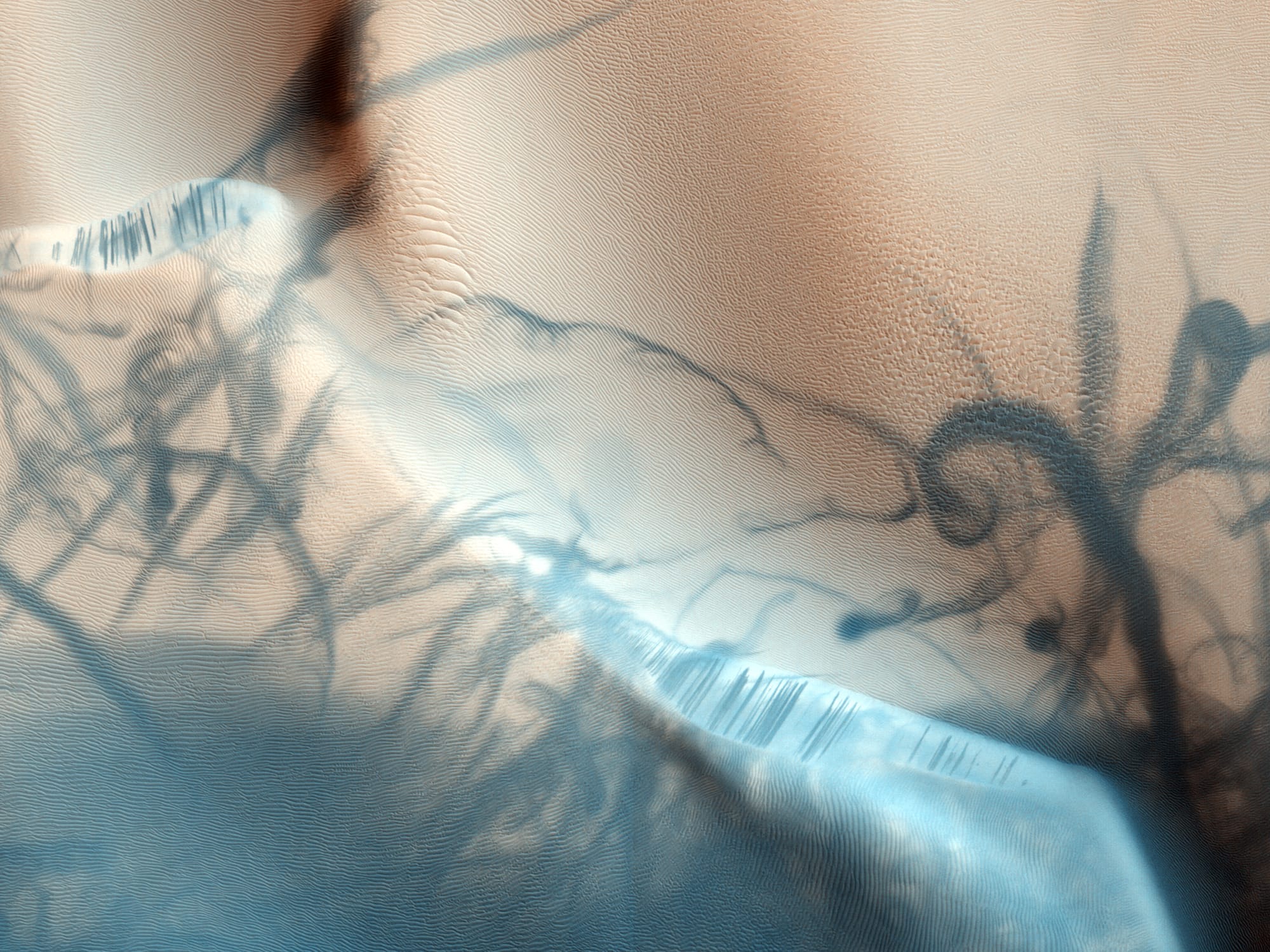
This portion of a recent high-resolution picture from the HiRISE camera on board the Mars Reconnaissance Orbiter shows twisting dark trails criss-crossing light coloured terrain on the Martian surface. Newly formed trails like these had presented researchers with a tantalizing Martian mystery but are now known to be the work of miniature wind vortices known to occur on the red planet - Martian dust devils. Such spinning columns of rising air heated by the warm surface are also common in dry and desert areas on planet Earth. Typically lasting only a few minutes, dust devils becoming visible as they pick up loose red-coloured dust leaving the darker and heavier sand beneath intact. On Mars, dust devils can be up to 8 kilometres high. Dust devils have been credited with unexpected cleanings of Mars rover solar panels.
Representative image for context; not directly related to the specific event in this article. License: Public domain. Source: Wikimedia Commons.

Air quality is a notable concern. Additional fine dust is expected to be carried by a northwesterly wind, pushing most areas into the “bad” category for PM2.5 tomorrow. People with respiratory sensitivities should take precautions and check local advisories, especially for outdoor activities.

Sea conditions are modest, with wave heights ranging from about 0.5 meters to 2 meters across all seas. This generally indicates calm to moderate conditions for coastal shipping and recreational marine activity.
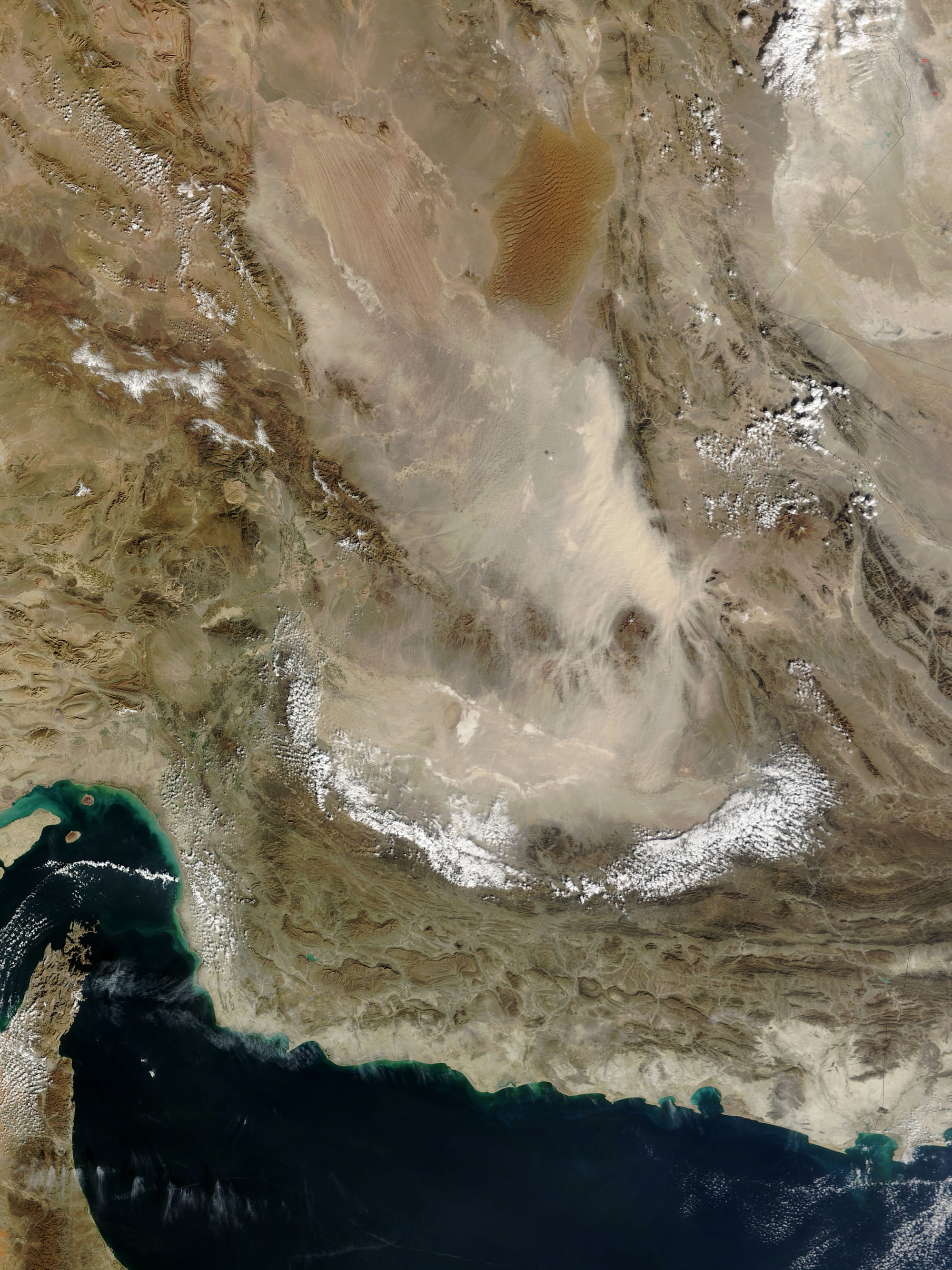
Pale tan dust billows over the Dasht-e Lut in eastern Iran, in this photo-like image from the Moderate Resolution Imaging Spectroradiometer (MODIS) on NASA’s Terra satellite. In the thickest part of the storm, the dust cloud blurs the texture of the land beneath it, revealing instead the texture of the air in waves and lines. The most distinctive waves surround Kuh-e Bazman, a 3,489-meter (11,450-foot) tall volcano, which rises above the dust cloud. The ripples in the dust are a reflection of turbulence created as air flows around the peak. The dust seeps into the valleys of the mountains south and east of the volcano.
The Dasht-e Lut, is a large salt desert in remote eastern Iran. The dust storm blows across the southern desert, leaving clear the distinctive orange dune fields and wind-swept lines in the north.
Representative image for context; not directly related to the specific event in this article. License: Public domain. Source: Wikimedia Commons.

This pattern—large temperature swings and intermittent dust events—is common in early spring in Korea. The dust is typically transported from continental sources and moved by prevailing winds, contributing to fluctuating air quality across the peninsula.

Why this matters to U.S. readers: Korea is a major supplier of electronics, semiconductors, and automobiles, industries that rely on stable weather and air quality for operations and worker health. Air-pollution episodes in East Asia can influence regional supply chains, labor productivity, and health advisories that affect multinational companies and markets with ties to Korea. Additionally, shipping and logistics near Korea’s ports can be sensitive to sea-state conditions and weather patterns that ripple through global trade.

Subscribe to Journal of Korea

Don’t miss out on the latest issues. Sign up now to get access to the library of members-only issues.
jamie@example.com
Subscribe