Samsung and LG Lead Global Monitor OLED Shipments Forecast to Reach 5.4 Million
A market research firm, AVC Revo, expects global monitor OLED shipments to rise to about 5.4 million this year, up from roughly 3.3 million last year, pushing OLED’s share of the overall monitor panel market to about 3 percent from 2 percent. The projection comes from AVC Revo’s IT OLED Market Quarterly Analysis.
Samsung Display and LG Display are forecast to dominate monitor OLED production, with about 4.0 million and 1.4 million units, respectively, compared with last year’s 2.5 million for Samsung and 0.8 million for LG. The remaining share is expected to be held by smaller manufacturers. Samsung’s 2023 monitor OLED shipments were higher than those for its TV OLED lineup, according to the report, while LG’s W-OLED shipments were in the mid- to high-6 million range with monitors accounting for a portion of that total.
Samsung Display’s monitor OLEDs use QD-OLED technology, and LG Display’s use white OLED, or W-OLED. The report notes a broad mix of customers: Samsung Display counts Acer, ASUS, Dell, HP, Lenovo, MSI and Samsung Electronics among its clients, while LG Display serves brands including ASUS and LG Electronics.

Looking ahead, AVC Revo says Chinese panel makers plan to begin mass-producing monitor OLEDs. CSOT, on its 5.5-generation Wuhan T12 line, is expected to start producing monitor OLEDs in the third quarter of this year, with a monthly capacity ranging from 3,000 to 9,000 sheets. The line already produces 21.6-inch medical OLED panels, and potential customers include ASUS, HP and TPV, with 14-inch laptop and 27-inch monitor OLEDs expected to enter production in the same period.
CSOT’s Wuhan T12 line is projected to scale toward the higher end of that capacity by year’s end. AVC Revo also points to CSOT’s planned 8.6-generation Guangzhou T8 line, which is scheduled to begin monitor OLED production in 2027.
BOE’s Hefei 8.5-generation B5 W-OLED line is described as preparing to make monitor OLEDs this year, with a monthly capacity around 2,000 sheets. BOE has previously developed TV W-OLED technology, but mass production for TVs is viewed as challenging; producing monitor-sized W-OLED in select dimensions is considered feasible.
HKC reportedly plans to deploy its eLEAP (a JDI technology) approach on a 6th-generation H7 line, with monitor OLED production slated for 2028. The H7 line would integrate LCD and OLED capacity, enabling LCD production from 2027 and OLED from 2028, with 14-inch and 16-inch laptop OLEDs expected first, followed by 27-inch and 32-inch monitor OLEDs.
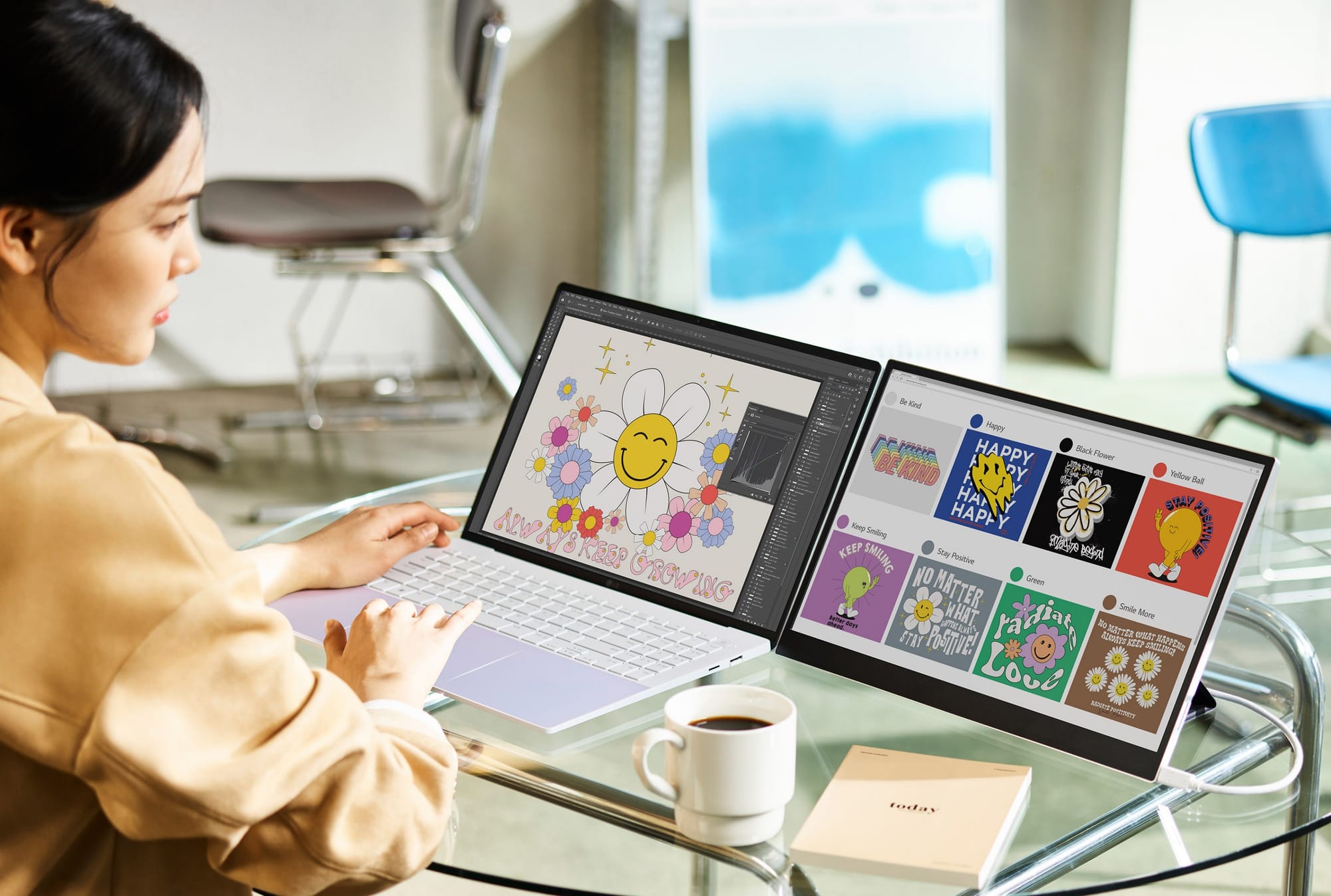
Samsung Display’s QD-OLED capacity is cited at about 48,000 sheets per month, while LG Display’s W-OLED capacity, combining Paju in Korea and Guangzhou in China, totals around 180,000 sheets monthly. The report notes that Samsung’s monitor QD-OLED output surpasses its TV QD-OLED shipments, with TV QD-OLED shipments estimated at about 1 million last year. For LG Display, TV W-OLED shipments were estimated at roughly 650,000 to 660,000 last year, leaving about 570,000 to 580,000 for TV W-OLED after accounting for monitor volume, according to AVC Revo.
AVC Revo projects worldwide monitor OLED shipments reaching about 7.2 million next year, with a 4 percent market penetration. That would amount to an increase of roughly 1.8 million units and a one-percentage-point rise in OLED’s share of the monitor market.
Why this matters beyond Korea: the trajectory of monitor OLEDs signals how OLED technology is expanding beyond TVs into mainstream computer displays, a shift with implications for U.S. tech brands, suppliers, and supply chains. A growing role for Chinese panel makers could reshape pricing, capacity, and lead times for Dell, HP, ASUS, Lenovo and other U.S. customers that source displays for laptops and monitors. The development also affects global competition in high-end displays, with Korea’s Samsung and LG facing intensified competition from CSOT, BOE and HKC. For U.S. policy and security considerations, broader OLED production in China could influence resilience and diversification of critical consumer and enterprise display supply chains, especially for technologies used in data centers, gaming, and professional visualization. The evolution also reflects how U.S. electronics brands may calibrate sourcing strategies, partnerships, and investment plans as OLED monitor adoption accelerates worldwide.