North Korea–China passenger rail resumes after six-year COVID-19 closure

A cross-border passenger train between North Korea and China has resumed service for the first time in about six years, following border closures tied to the COVID-19 pandemic. The first Pyongyang-origin train arrived at Beijing Railway Station at 8:40 a.m. local time after departing Pyongyang at 10:26 a.m. yesterday.

A train traveling in the opposite direction, departing Beijing yesterday afternoon, is expected to arrive in Pyongyang later today, according to the timetable.

Kate Carter, on her 90th birthday, poses for photographer Carol M. Highsmith in the log cabins in North Carolina, United States, where Highsmith's great-grandfather and grandfather, Pleasant Jiles Carter (1847-1931) and Yancey Ligon Carter (1873-1947), were born and lived in Wentworth, North Carolina.
Representative image for context; not directly related to the specific event in this article. License: Public domain. Source: Wikimedia Commons.

The restart ends a six-year gap in North Korea–China passenger service, which began when North Korea closed its borders in January 2020 to curb the spread of the coronavirus.

Cross-border rail travel between the two countries has been limited since then, and the renewed service signals a rare step toward the reopening of people-to-people exchanges between North Korea and China amid broader regional tensions and ongoing sanctions.

For the United States, the development matters because it affects regional dynamics in East Asia. China remains Pyongyang’s largest trading partner and a key conduit for goods and energy, so any easing of cross-border movement could influence North Korea’s access to markets and potential sanctions enforcement, as well as regional travel, logistics, and humanitarian considerations.
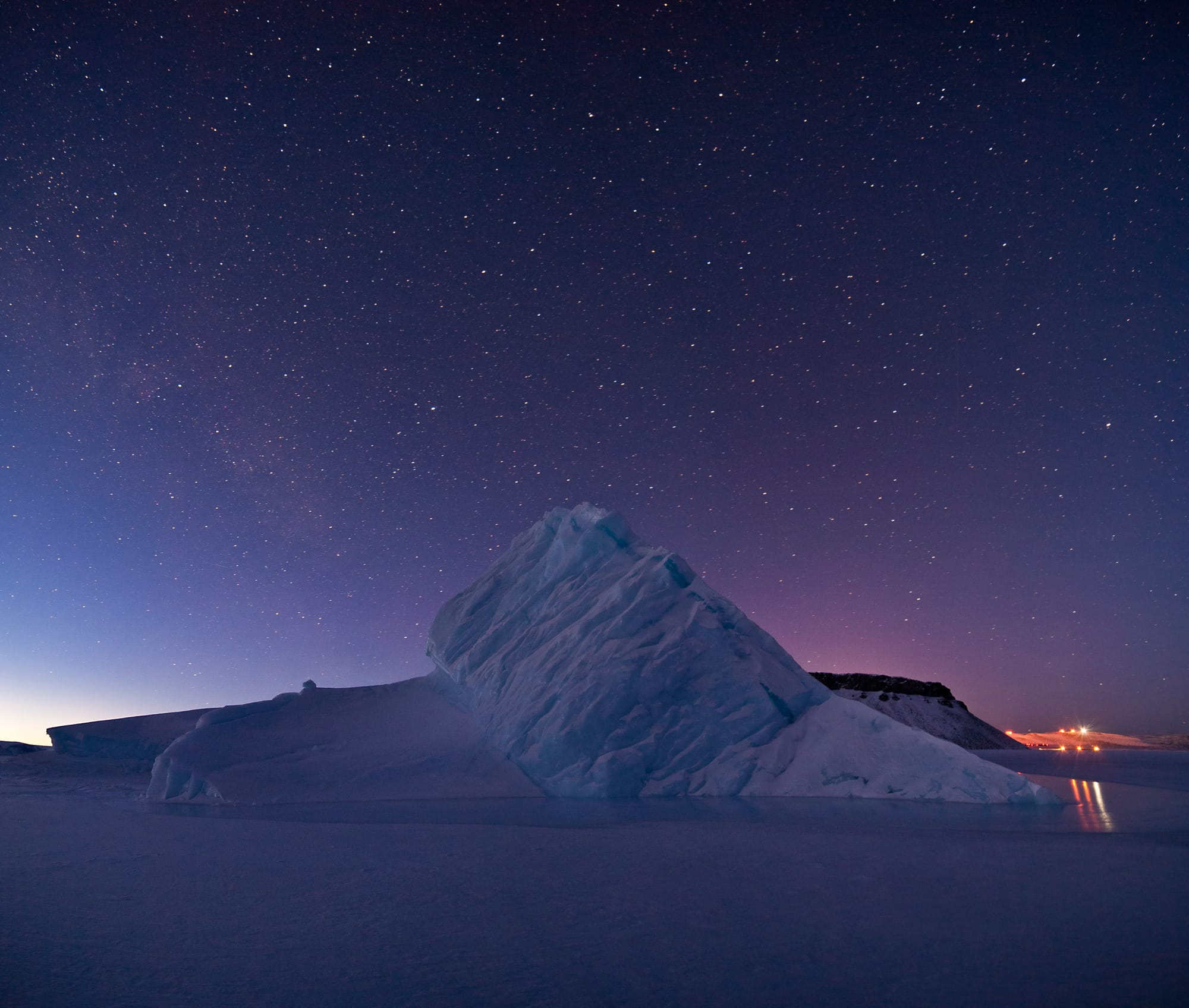
For five years, Jeremy Harbeck has worked as a support scientist for NASA’s Operation IceBridge, an airborne mission to study polar ice. The data processing that he does typically takes place in an office at NASA’s Goddard Space Flight Center in Maryland. However, to speed the process of delivering data to the Arctic sea ice forecasting community, Harbeck traveled to Greenland for the first time in spring 2015.
He had just arrived at Greenland’s Thule Air Base on March 20 when a mechanical issue grounded the aircraft. No science flight could happen for a few days. As teams in the United States and Greenland scrambled to locate and deliver a replacement part, researchers on the ground waited. Some of them hiked to what was locally known as “the iceberg.”
The unnamed berg pictured above has been frozen in place by sea ice in North Star Bay. Harbeck shot the photograph—a composite of four 49-second images—on March 21 at about 2:30 a.m. local time. The sun never fully sets at this time of year in the Arctic, so sunlight appears on the left side of the image. Lights from Thule are visible on the right side. Look for the Milky Way (top left) and a few very faint meteors visible in the early morning sky.
Harbeck left the dock at Thule with sea ice scientist (and current IceBridge project scientist) Nathan Kurtz and a local recreation officer at about 10 p.m. From there, the group hiked 2.4 kilometers (1.5 miles) across the still-thick sea ice in weather that Harbeck called a “pleasant” minus 18 degrees Celsius (0 degrees Fahrenheit). They paused frequently on the way, and they even circled the berg to check for polar bears.

“You don’t have a sense of scale of this berg until you get up to it,” Harbeck said. “It’s about the size of my apartment building, and that’s only the part protruding from the water.” Assuming the berg is ungrounded (which is uncertain), about one-tenth of its mass is above water.
Representative image for context; not directly related to the specific event in this article. License: Public domain. Source: Wikimedia Commons.

Analysts note the move reflects a practical dimension of Beijing’s engagement with Pyongyang within the broader China–North Korea relationship, even as Washington monitors Beijing’s policies toward North Korea and their implications for regional security.

The report provides limited details on frequency, passenger numbers, or future schedules, and officials have not disclosed additional information about ongoing operations.

Subscribe to Journal of Korea

Don’t miss out on the latest issues. Sign up now to get access to the library of members-only issues.
jamie@example.com
Subscribe