U.S. escalates Epic Fury against Iran to neutralize missiles and defense industry
Defense Secretary Pete Hegseth asserted that Iran’s new supreme leader, Mojtaba Khamenei, may be disfigured, speaking at a Pentagon briefing amid the U.S. operation dubbed Epic Fury that began last month. He said the United States intends to cripple Iran’s military capabilities at unprecedented speed and would destroy much of Iran’s defense industry.
Hegseth spoke at a joint briefing with the Chairman of the Joint Chiefs, Dan Kane, in the Washington, D.C., area. He noted that Mojtaba had delivered a hard-line message against the United States, and he described the Iranian leader as “not the sort of person we can call ‘the fittest,’” given the condition he said the leader is in.
The defense secretary argued that Iran once possessed a modern, capable military, but that it is rapidly being degraded. He claimed Iran has no air-defense network, no air force, and no navy remaining, with missiles, missile launchers, and drones either destroyed or shot down.
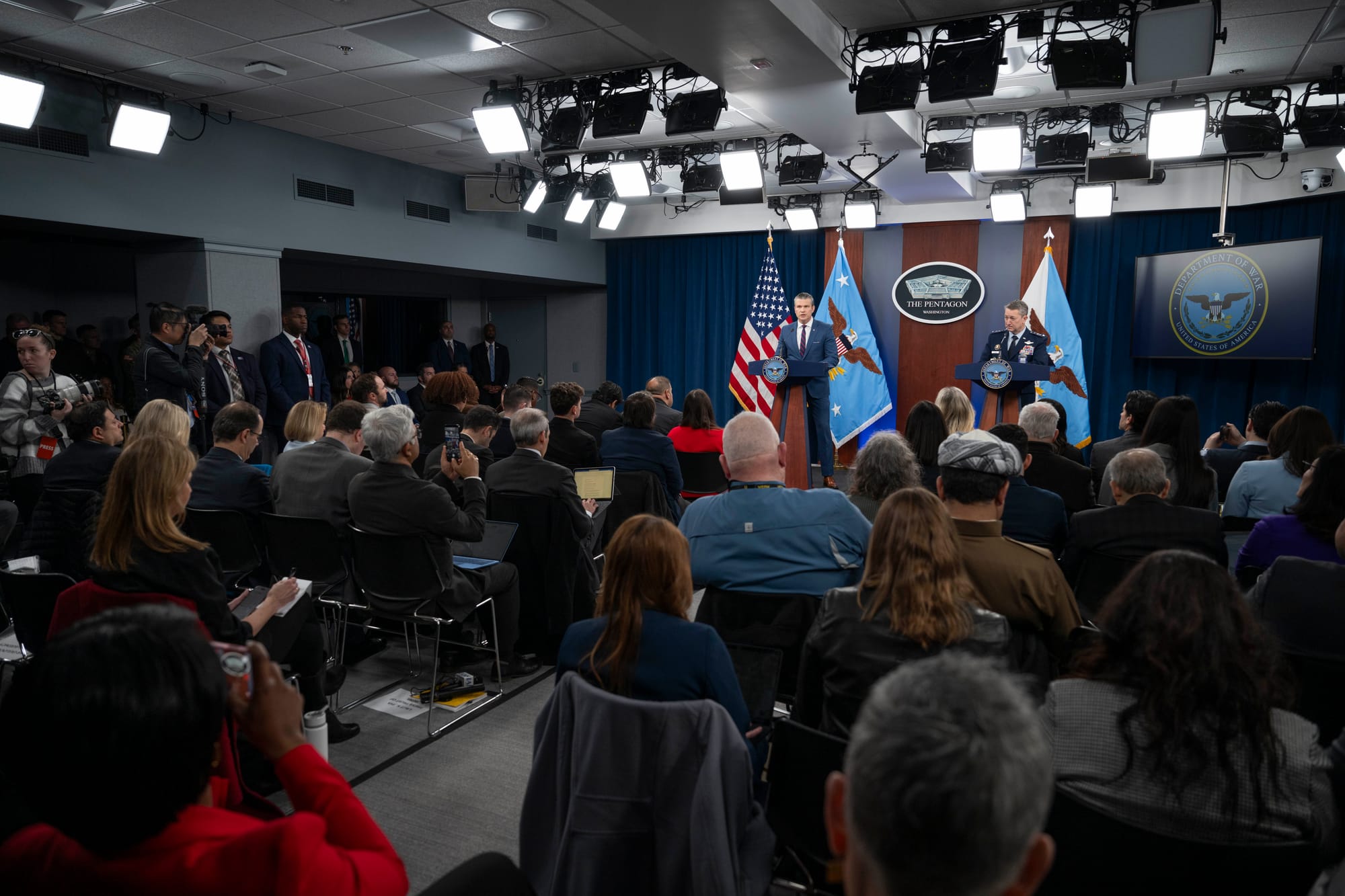
Kane said today would be a day of the strongest firepower across the theater, with more than 6,000 targets attacked and fighter-bomber sorties continuing around the clock. He framed the campaign as a sustained, high-intensity effort across multiple fronts.
On maritime operations, Hegseth said the United States is planning to protect shipping through the Strait of Hormuz and that interagency coordination has been a priority from the outset. He asked the public to trust that U.S. interests would be advanced as the operation continues.
Regarding the possibility that Iran might have laid mines, Hegseth said there was no clear evidence to confirm such a claim at this time.
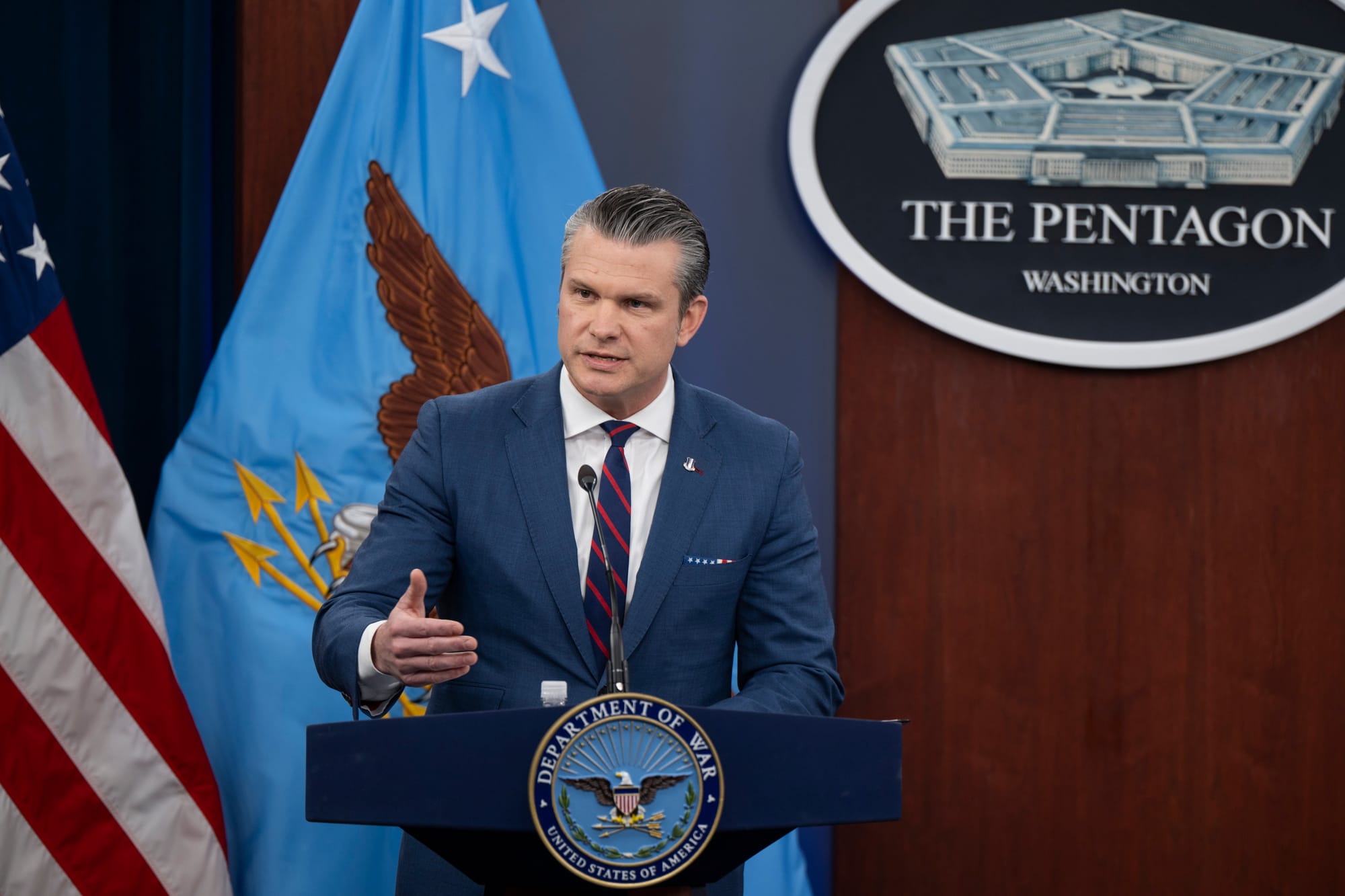
The briefing also touched on broader U.S. policy toward Iran, with Hegseth arguing that past presidents allowed broad, shifting goals and that the current mission would end only when the president determines the goals are achieved. He said the intent was to neutralize missiles and the defense-industrial base, defeat the Iranian navy, and block the country’s nuclear ambitions, with decision-making about pace and timing centralized with the presidency.
Separately, Central Command reported that a KC-35 aerial-refueling aircraft crashed in western Iraq during a mission, killing four crew members. Kane said the incident occurred over friendly territory and was not caused by enemy or allied fire, and he urged prayers for the families and service members involved.
Why this matters for the United States: Hormuz is a global energy chokepoint through which a large share of Middle East oil and LNG flows. Escalation in the region can affect fuel prices, energy security, and the resilience of supply chains, with potential implications for U.S. markets, defense budgeting, and allied security commitments in the Gulf. The evolution of Iran’s capabilities and the U.S. response also influences technology and defense trade, sanctions policy, and regional diplomacy that shape global strategic stability.