Woljoongdo Eight-Panel Royal Landscape On Display At Jangseogak Archive

The Academy of Korean Studies’ Jangseogak archive is publicly displaying the full eight-panel set of the Woljoongdo (越中圖), a royal landscape painting that reconstructs the final years of King Danjong from the Joseon dynasty’s perspective. The eight-panel work will be shown in the Jangseogak Exhibition Room on AKS’s campus in Seongnam, Gyeonggi Province, from June 16 to June 26.

Danjong reigned from 1452 to 1455 and was dethroned by his uncle Sejo, who sent him into exile at Yeongwol. The edict cited his alleged offenses against the royal shrine and state, and Danjong’s status was downgraded as he was moved away from the capital, ultimately dying months later in exile. In the late 17th and early 18th centuries, scholars and officials reinterpreted Danjong as a loyal king, a shift that culminated in a restoration of his memory and the completion of projects like Woljoongdo.
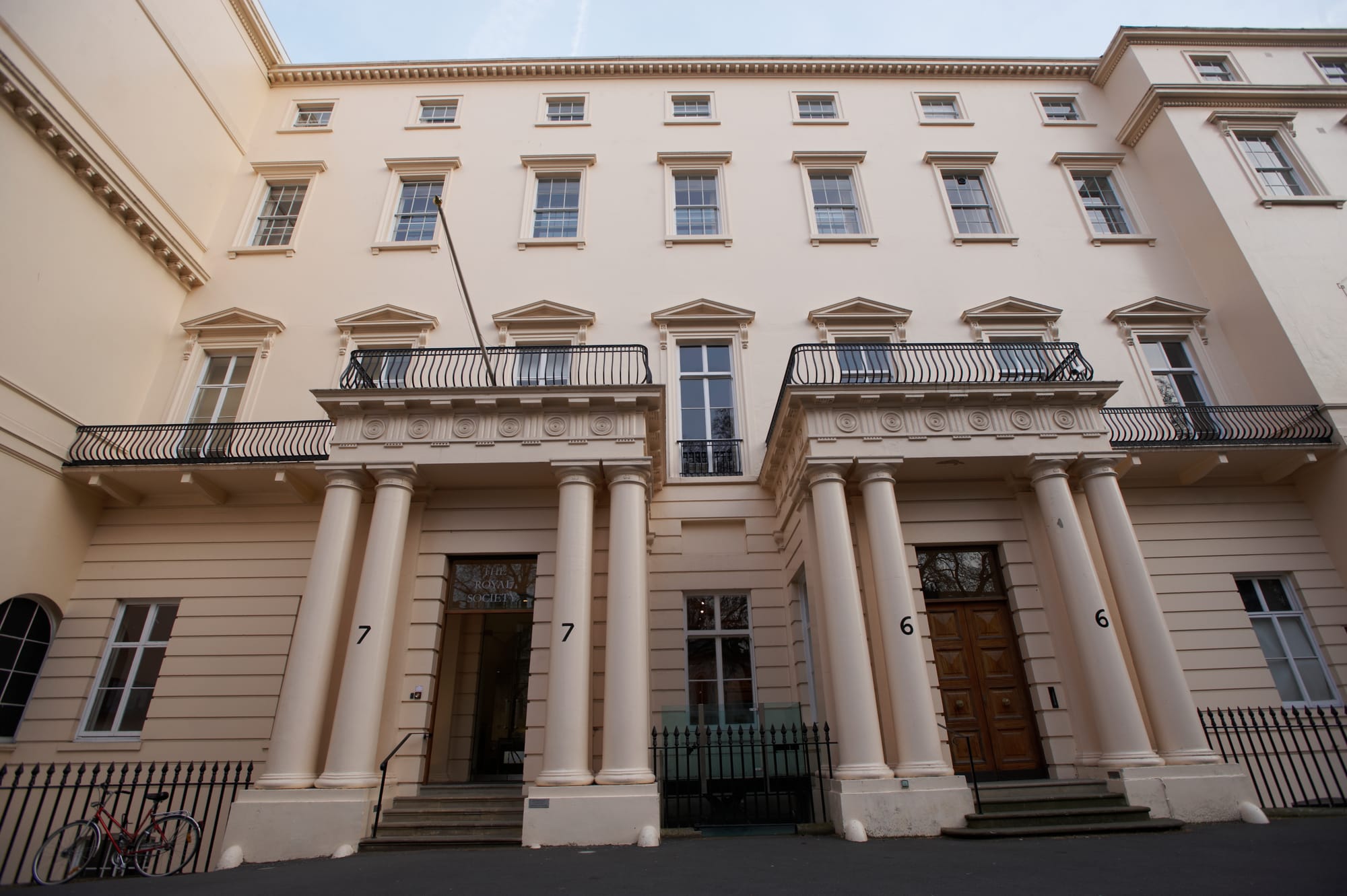
Entrance to The Royal Society, 7-9 Carlton House Terrace, London

 This file is licensed under the Creative Commons Attribution-Share Alike 3.0 Unported license.Attribution: The Royal Society
You are free:
to share – to copy, distribute and transmit the work
to remix – to adapt the work
Under the following conditions:
attribution – You must give appropriate credit, provide a link to the license, and indicate if changes were made. You may do so in any reasonable manner, but not in any way that suggests the licensor endorses you or your use.
share alike – If you remix, transform, or build upon the material, you must distribute your contributions under the same or compatible license as the original.https://creativecommons.org/licenses/by-sa/3.0CC BY-SA 3.0 Creative Commons Attribution-Share Alike 3.0 truetrue
 

.mw-parser-output .messagebox{margin:4px 0;width:auto;border-collapse:collapse;border:2px solid var(--border-color-progressive,#6485d1);background-color:var(--background-color-neutral-subtle,#fbfcff);color:var(--color-base,#202122);box-sizing:border-box;border-inline-start-width:8px}.mw-parser-output .messagebox.mbox-small{font-size:88%;line-height:1.25em}.mw-parser-output .mbox-warning,.mw-parser-output .mbox-speedy{border:2px solid var(--border-color-error,#b22222);background:var(--background-color-error-subtle,#ffdbdb);border-inline-start-width:8px}.mw-parser-output .mbox-serious,.mw-parser-output .mbox-delete,.mw-parser-output .mbox-stop{border:2px solid var(--border-color-error,#b22222);border-inline-start-width:8px}.mw-parser-output .mbox-issue,.mw-parser-output .mbox-content{border:2px solid #f28500;background:var(--background-color-warning-subtle,#ffe);border-inline-start-width:8px}.mw-parser-output .mbox-query,.mw-parser-output .mbox-style{border:2px solid #f4c430;background:var(--background-color-warning-subtle,#ffe);border-inline-start-width:8px}.mw-parser-output .mbox-shit{border:2px solid #960;border-inline-start-width:8px}.mw-parser-output .mbox-license{border:2px solid #88a;border-inline-start-width:initial}.mw-parser-output .mbox-legal{border:2px solid var(--border-color-notice,#666);background:var(--background-color-base,#fff);border-inline-start-width:8px}.mw-parser-output .mbox-honor{border:2px solid #ca3;background:var(--background-color-warning-subtle,#fcf4db);border-inline-start-width:8px}.mw-parser-output .mbox-growth{border:2px solid #8d4;background:var(--background-color-success-subtle,#d5fdf4);border-inline-start-width:8px}.mw-parser-output .mbox-move{border:2px solid #93c;border-inline-start-width:8px}.mw-parser-output .mbox-protection,.mw-parser-output .mbox-message{border:2px solid var(--border-color-base,#aaa);border-inline-start-width:8px}.mw-parser-output .messagebox .mbox-text{border:none;padding:0.25em 0.9em;width:100%}.mw-parser-output .messagebox .mbox-image{border:none;padding:2px 0 2px 0.9em;text-align:center}.mw-parser-output .messagebox .mbox-imageright{border:none;padding:2px 0.9em 2px 0;text-align:center}.mw-parser-output .messagebox .mbox-empty-cell{border:none;padding:0;width:1px}.mw-parser-output .messagebox .mbox-invalid-type{text-align:center}@media(min-width:720px){.mw-parser-output .messagebox{margin:4px 10%}.mw-parser-output .messagebox.mbox-small{clear:right;float:right;margin:4px 0 4px 1em;width:238px}}body.skin--responsive .mw-parser-output table.messagebox img{max-width:none!important}This work is free and may be used by anyone for any purpose. If you wish to use this content, you do not need to request permission as long as you follow any licensing requirements mentioned on this page.
The Wikimedia Foundation has received an e-mail confirming that the copyright holder has approved publication under the terms mentioned on this page. This correspondence has been reviewed by a Volunteer Response Team (VRT) member and stored in our permission archive. The correspondence is available to trusted volunteers as ticket #2014062710019796.
If you have questions about the archived correspondence, please use the VRT noticeboard.
Ticket link: https://ticket.wikimedia.org/otrs/index.pl?Action=AgentTicketZoom&TicketNumber=2014062710019796
Find other files from the same ticket:
Representative image for context; not directly related to the specific event in this article. License: CC BY-SA 4.0. Source: Wikimedia Commons.

The displayed panels depict key sites tied to Danjong’s life and afterlife in Joseon memory: his tomb at Jangneung, the exile site Cheongnyeongpo, the place where he lived after relocating to the Gwanpungheon and where he is said to have composed poems, and the Ja Gyuru (a pavilion associated with him). The collection also includes the Changjeolsa shrine honoring the忠臣 (loyal ministers) who remained devoted to Danjong, along with a stele pavilion that Yeongjo inscribed in 1763 marking Danjong’s former home.

Korean Studies officials describe Woljoongdo not merely as an antique painting but as a documentary record of royal memory and the Joseon court’s memory culture. The work blends art with archival narrative, offering a living glimpse into how the dynasty sought to memorialize a tragedy and to shape public perception of the royal lineage.

For international audiences, the display illuminates how Korea shapes national identity through cultural memory and state-sponsored art. It sheds light on the Joseon dynasty’s archival traditions, the politics of reputation surrounding a fallen monarch, and the long-running effort to “reclassify” history to support later rulers. The exhibit also highlights Korea’s commitment to preserving royal records and landscape painting as an integrated record of history, art, and politics.
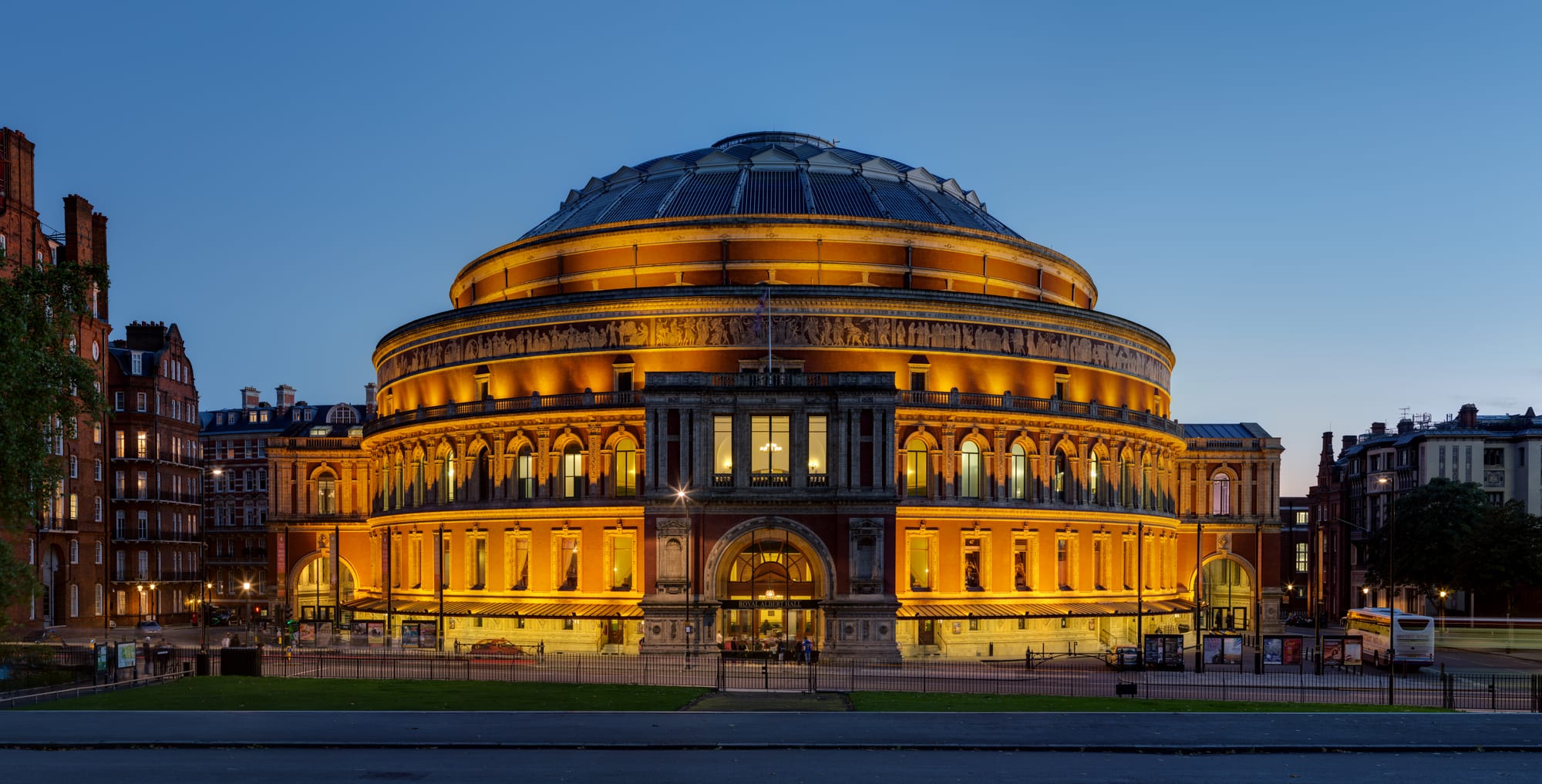
The Royal Albert Hall, as viewed from the Albert Memorial in Kensington Gardens, London. This is a 36 segement stitch (3 rows × 4 columns × 3 bracketed exposures).
Representative image for context; not directly related to the specific event in this article. License: CC BY-SA 3.0. Source: Wikimedia Commons.

The Jangseogak archive, housed within AKS, is dedicated to preserving royal documents and literature. The current exhibition situates these eight panels within a broader tradition of royal painting and record-keeping, and underscores Korea’s ongoing efforts to present its imperial-era heritage to the world. The public viewing runs through June 26, inviting researchers and visitors to engage with a pivotal episode in Joseon memory.

The Woljoongdo display thus offers a concise window into how ancient Korea managed memory, legitimacy, and mourning through art. For U.S. readers, it provides context for Korea’s cultural diplomacy, its approach to heritage preservation, and the broader significance of monarchic memory in East Asia. It also complements ongoing interest in Korean history, art history, and the ways in which cultural artifacts inform contemporary policy, education, and museum exchange.

Subscribe to Journal of Korea

Don’t miss out on the latest issues. Sign up now to get access to the library of members-only issues.
jamie@example.com
Subscribe