South Korea Faces Snow and Rough Seas; Shipping Could Be Disrupted

South Korea’s eastern regions are expected to be largely cloudy today, with the rest of the country seeing occasional cloudiness. Rain is forecast along the East Sea coast in Gangwon and North Gyeongsang, and in Busan and Ulsan, totaling around 5 millimeters in those areas.

Snow is possible in the mountainous terrain of Gangwon and North Gyeongsang, with accumulations up to about 5 centimeters. The East Sea coast could see about 1 centimeter of snow in some locations. Strong winds are anticipated in these areas.
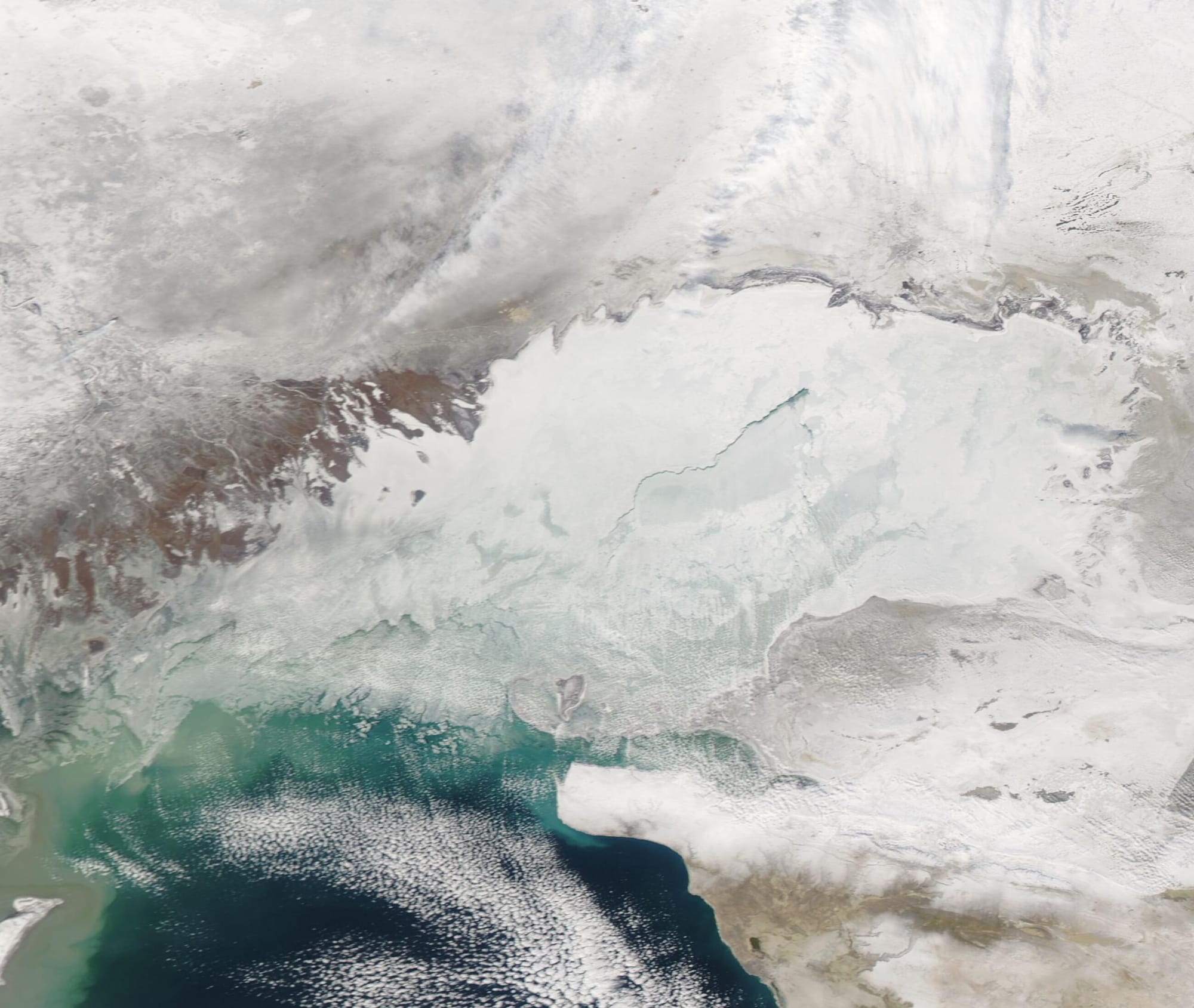
January 25, 2024 January 1, 2024
The Caspian Sea is the largest brackish-water lake on Earth, spanning about 143,200 square miles (371,000 square kilometers)—an area only slightly smaller than the U.S. state of Montana. It is also a sea of contrasts, with a shallow and slightly saline north end and a dramatically deep and much saltier southern end. These differences make big differences, especially when it comes to the formation of wintertime ice. The Northern Caspian Sea freezes over most winters, although the thickness, area covered, and even the ridges in the ice dependent on variable factors such as surrounding air temperature, winds, and fluctuating water depth. The Middle Caspian sees ice along the coastlines only in severe winters, while the Southern Caspian does not ice up.
Freeze-up on the Northern Caspian can start as early as November, but warm temperatures in 2023 delayed ice formation. A severe cold blast in early December brought enough of a chill to create a thin layer of ice over much of the water by mid-December, but it wasn’t until January 2024 that winter really got underway in Kazakhstan and the portion of Russia bordering the Northern Caspian Sea. As temperatures plummeted, the Northern Caspian rapidly froze over.
The Moderate Resolution Spectroradiometer (MODIS) on NASA’s Aqua satellite acquired a true-color image of snow and ice over the Northern Caspian Sea on January 24, 2024. Despite the thoroughly frozen condition of the north, no ice covers the visible portion of the Middle Caspian Sea, where the water looks bright blue. Snow also covers the surrounding lands of Kazakhstan (north and east) and Russia (west).

A second Aqua MODIS true-color image was acquired of the same region on January 1, 2024, and it can be viewed by clicking on the date below the images. On that date, ice covered only a small portion of the northernmost Caspian Sea. In addition, tan sediment swirled in the shallow waters. Toggling back and forth between the images will show what a large difference a few weeks can make in the life of the Caspian Sea.
Representative image for context; not directly related to the specific event in this article. License: Public domain. Source: Wikimedia Commons.

Daytime highs are projected to range from 7 to 14 degrees Celsius across the country, with Seoul expected to reach about 12C. These readings are slightly cooler than yesterday.

Tonight into tomorrow morning, temperatures are forecast to dip toward freezing in many areas. Seoul is expected to be around 3C, while nationwide lows could range from -4C to 4C, similar to today’s levels.

Sea conditions are rough, with waves of 2 to 3 meters forecast in several zones, including parts of the southern and eastern seas and waters around Jeju Island. The windy, wet weather and high seas could affect coastal activities and freight shipping.
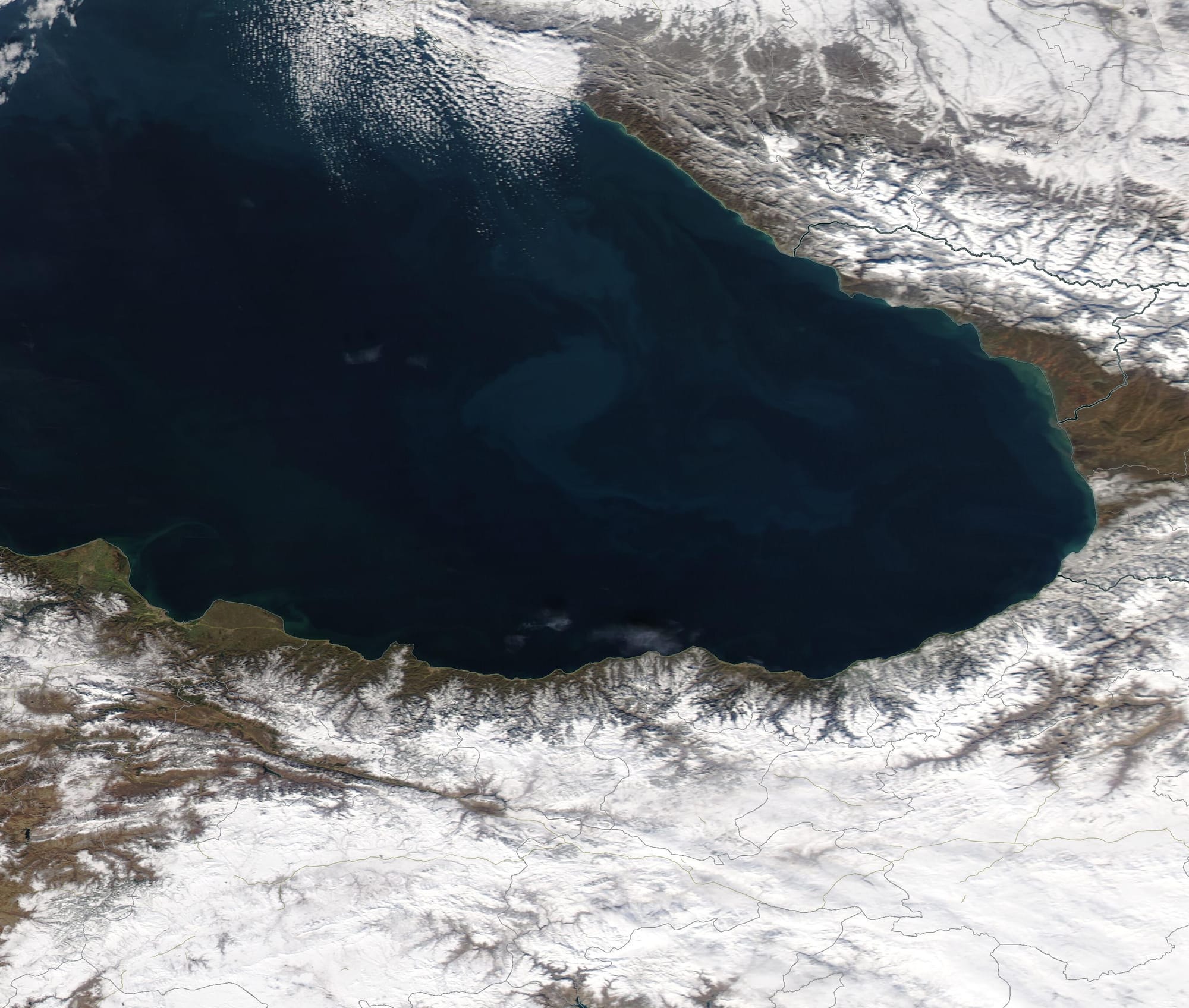
Bright white snow framed the dark waters of the Black Sea in late January 2021. The Moderate Resolution Imaging Spectroradiometer (MODIS) on board NASA’s Aqua satellite acquired a true-color image of the winter’s scene on January 21.
Heavy snow drapes over Turkey’s Pontic Mountains south of the Black Sea while the Great Caucasus Mountains wear a wintery mantle along the northeast shore. In the lower elevations the land appears tan, illustrating the senescence of winter vegetation. While the plants on land have dried with the winter’s chill, plant-like organisms have blossomed in the deep blue waters of the Black Sea, creating swirls of green so large they can be seen from space. Known as phytoplankton, the microscopic organisms live in these waters year-round in relatively small numbers. When conditions are right—correct nutrients, sunlight, and water temperature—they reproduce explosively creating large floating blooms. While summer is the best time for phytoplankton blooms in the Black Sea, they may occur any time of the year.
Representative image for context; not directly related to the specific event in this article. License: Public domain. Source: Wikimedia Commons.

Over the weekend, Saturday and Sunday are expected to remain largely cloudy, with limited sunshine and ongoing unsettled conditions in parts of the peninsula.

Why this matters for the United States: South Korea is a crucial hub for global electronics, autos, and other high-tech exports, with Busan and Ulsan hosting major ports and industrial complexes. Rain, snow, and strong winds can disrupt road transport to factories and delay shipments through one of the world’s busiest container port networks, potentially impacting supply chains that feed U.S. manufacturers and retailers. The anticipated sea conditions around Jeju and along the East Sea may affect international shipping schedules and fuel demand in winter weather.

Subscribe to Journal of Korea

Don’t miss out on the latest issues. Sign up now to get access to the library of members-only issues.
jamie@example.com
Subscribe