South Korea's Yeongwol Turns Danjong's Royal Heritage into Film Tourism Hub
Around the moment the Korean film The Man Who Lives with the King was approaching 9.5 million admissions, I joined the growing audience who had not yet seen it and headed for Yeongwol, a county in Gangwon Province with deep Joseon-era resonance.
In 1457, the young prince Danjong was demoted and exiled to Yeongwol. His journey from Hanyang (modern Seoul) to this corner of the land took about a week, and his final destination was Cheongnyeongpo, a place described as an “island not island” because three sides are river and the other side a sheer cliff. The entry to Cheongnyeongpo remains a brief, one-minute boat ride, a deliberate, symbolic barrier that still echoes the king’s isolation.
On Cheongnyeongpo, visitors encounter a setting that evokes a royal retreat. A forested area surrounds a rebuilt residence complex known as the Eoso, reconstituted to convey where the king and his attendants once stayed. The main building and the accompanying lodging for palace women and servants are arranged to give a sense of the royal life Danjong would have known in exile.
Following the Danjong trail, you pass among ancient pines and markers. A roughly six-century-old pine called the Gwaneumsong stands where Danjong is said to have spent long hours. Nearby, Manghyangtap and Nosan-dae offer vantage points and memorials linked to the prince’s longing for Seoul, a city he left behind as he faced a tragic end.
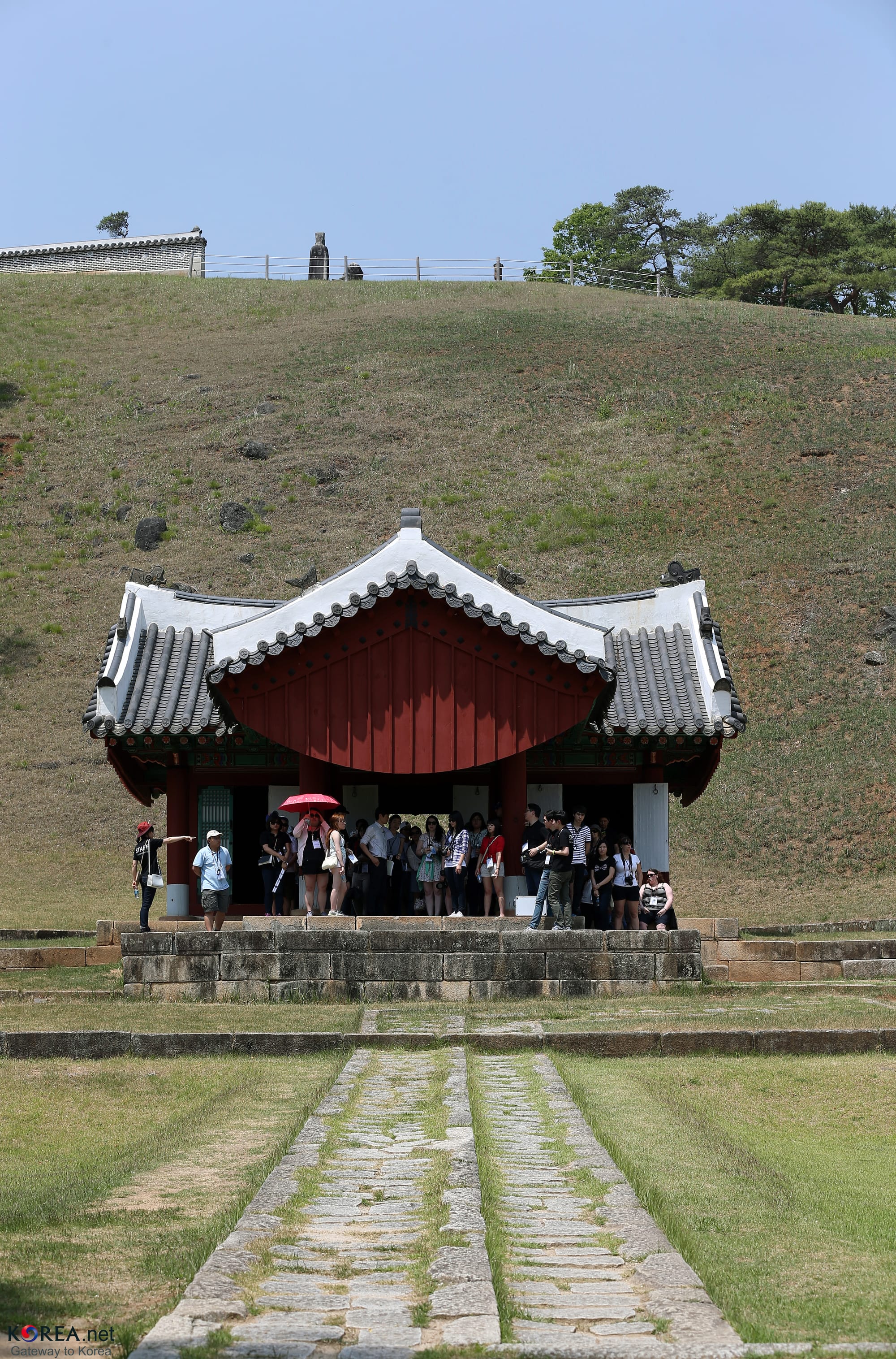
Danjong’s death and burial give Yeongwol a distinctive royal-heritage profile. The monarch’s body was recovered by the loyal official Eom Heung-do and placed at Jangneung, the royal tomb in Yeongwol. Yeongwol’s crown-tah is notable for being the only Joseon royal tomb located outside the capital area, and for its layout, which separates the burial site from the ancestral rites space. The site also honors 268 tablets dedicated to loyal vassals and includes a separate shrine commemorating Eom Heung-do’s role in the prince’s history.
Another historical layer is the 관풍헌, a historic guesthouse at Yeongwol’s town center that served as the county office’s lodging and is associated with Danjong’s final days. The site preserves a pavilion, Jakyuru, where Danjong is said to have written poetry during his residence, connecting political history with literary memory.
Beyond history, Yeongwol has a tangible film-and-pop-culture footprint. The Cheongnok Dabang café, kept in a vintage, house-style ambiance, continues to draw visitors who recall the scenes from The Radio Star and other productions. The nearby Radio Star Museum sits in the old KBS Yeongwol broadcasting facility, inviting fans to connect cinema and radio nostalgia. From the nearby Beolmaro Observatory, visitors are reminded of Ahn Sung-ki’s famous line about stars reflecting light, a cultural touchstone for Korean cinema.

Yeongwol’s pull extends to modern dramas as well. The shooting sites for Motel California include Sejongjang Inn, a real, functioning lodging near Yeongwol Station, with the adjacent veterinary hospital kept in its original exterior for fans and visitors to photograph. The tourism network even folds in local shops that repurpose space into themed experiences, where visitors can sample regional desserts and breads made with Yeongwol ingredients.
Local bakeries are a notable draw. Yeongwol Salt Bread and varieties featuring gondre greens with a Gorgonzola-salt crust, apple bread from Yeongwol apples, and gondre Castella are sold alongside breads from “Yeongwol A-Peang” and specialty shops like Kibeun Jo-eun Bakery, which features a “Danjong Dessert Tray” inspired by the prince’s story. These product lines underscore Yeongwol’s shift from a history-rich site to a living, culinary-tinged tourism economy.
For U.S. readers, Yeongwol illustrates how Korean cinema and television can drive regional development through place-based tourism. The area leverages historic sites tied to Danjong with contemporary media franchises, turning a rural county into a site of cultural exchange, film heritage, and consumer-arts experiences. As interest in Korean storytelling grows in the United States, Yeongwol serves as a case study in how history, narrative, and local businesses align to attract international visitors and sustain regional economies.