Korea to draw foreign investment with 24-hour FX market, offshore KRW settlement

Korea’s Deputy Prime Minister and Finance Minister Goo Yoon-cheol visited Tokyo on the 13th to present a Korea economic investment briefing to about 100 global investors, hosted by Bloomberg’s Tokyo bureau. The event aimed to strengthen foreign investor confidence in Korea’s economy.

At the briefing, Goo highlighted Korea’s competitive strengths in semiconductors, nuclear power, shipbuilding, and defense, and he stressed that the government will pursue capital-market activation policies to lift potential growth and improve foreign investor access. He called for continued focus on Korea’s AI-driven transformation and ultra-innovative economy initiatives.

NSF Director Subra Suresh discussed the president's fiscal year 2013 budget request of $7.373 billion for the agency at a budget briefing on February 13, 2012. The figure is an increase of $340 million, or 4.8 percent over the FY 12 estimated level. "This investment in science and engineering reflects an increase in core research funding and moves our nation forward by connecting the science and engineering enterprise with potential economic, societal and educational benefits in areas critical to job creation and a growing economy," Suresh told the audience. Judy Gan, director of NSF's Office of Legislative and Public Affairs was the moderator for the briefing that was attended by agency leadership and staff, invited guests, the media and the public. The briefing was broadcast to several overflow rooms, including one that featured a sign language interpreter. Following the agency briefing, NSF's assistant directors and office heads held breakout sessions. For example, Joan Ferrini-Mundy, assistant director for education and human resources, detailed the budget request as it related to the EHR directorate. For more information about the budget briefing, see the news release. The archived webcast is also available. 
Credit:  Sandy Schaeffer for NSF 

Visit NSF’s Multimedia Gallery, at www.nsf.gov/news/mmg, for more images, and for video.
Representative image for context; not directly related to the specific event in this article. License: Public domain. Source: Wikimedia Commons.

The Ministry of Economy and Finance noted Korea has posted nine straight months of exports at historically high levels, with macro fundamentals described as sound. It also pointed to manageable government debt and external debt, framing the domestic economy as resilient amid global volatility.

The ministry said it will expand investment access by making foreign exchange markets operate 24 hours a day and by building offshore KRW settlement infrastructure. Officials argued these steps would further open Korea’s markets to international investors and support smoother capital flows.

Participants in the briefing reportedly showed strong interest in Korea’s foreign-exchange and government-bond markets, as well as related policies, signaling robust investor appetite for the Korean market.
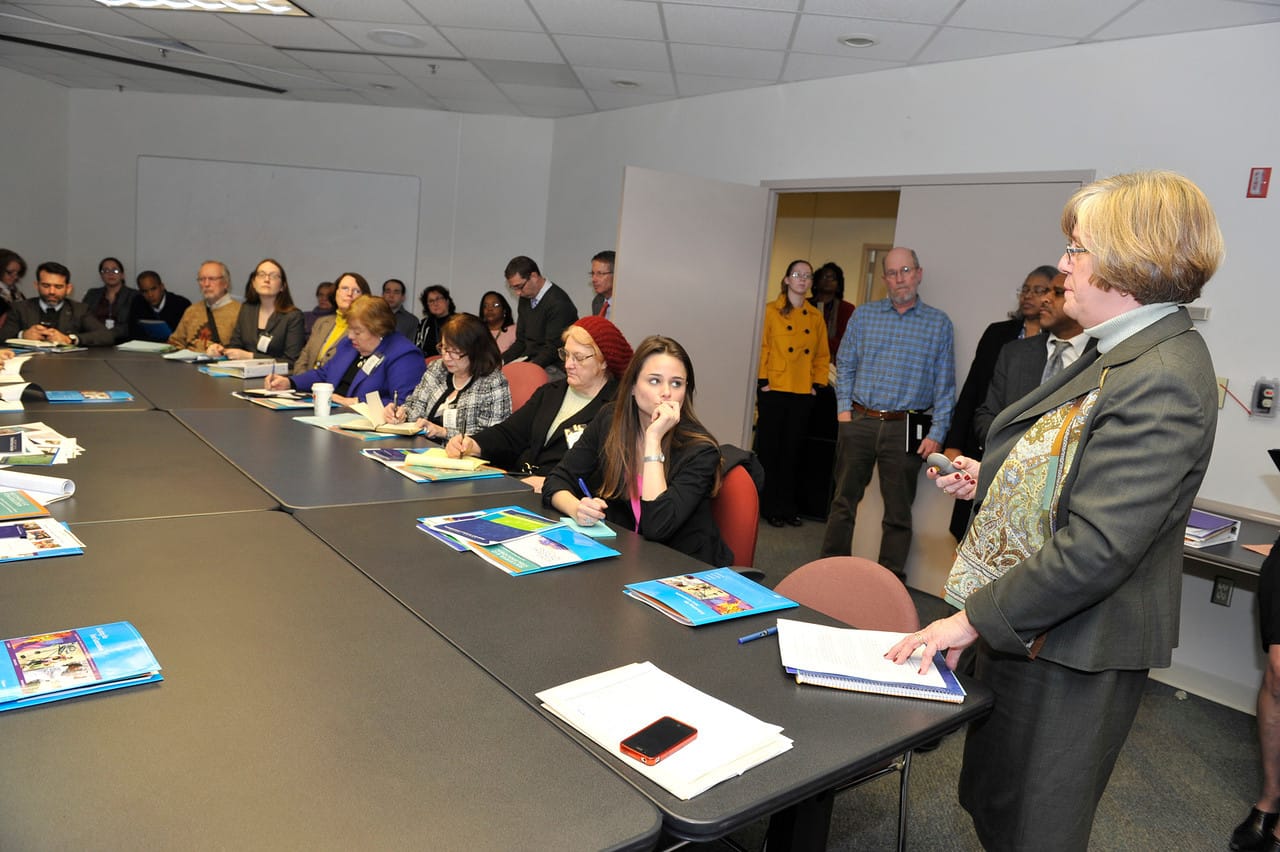
NSF Director Subra Suresh discussed the president's fiscal year 2013 budget request of $7.373 billion for the agency at a budget briefing on February 13, 2012. The figure is an increase of $340 million, or 4.8 percent over the FY 12 estimated level. "This investment in science and engineering reflects an increase in core research funding and moves our nation forward by connecting the science and engineering enterprise with potential economic, societal and educational benefits in areas critical to job creation and a growing economy," Suresh told the audience. Judy Gan, director of NSF's Office of Legislative and Public Affairs was the moderator for the briefing that was attended by agency leadership and staff, invited guests, the media and the public. The briefing was broadcast to several overflow rooms, including one that featured a sign language interpreter. Following the agency briefing, NSF's assistant directors and office heads held breakout sessions. For example, Joan Ferrini-Mundy, assistant director for education and human resources, detailed the budget request as it related to the EHR directorate. For more information about the budget briefing, see the news release. The archived webcast is also available. 
Credit:  Sandy Schaeffer for NSF 

Visit NSF’s Multimedia Gallery, at www.nsf.gov/news/mmg, for more images, and for video.
Representative image for context; not directly related to the specific event in this article. License: Public domain. Source: Wikimedia Commons.

Ahead of the briefing, Goo met with executives from major financial institutions including Mitsubishi UFJ Financial Group, MUFG Bank, Mizuho Securities, Nomura Securities, Daiwa Securities, and Bloomberg. He said he hopes for greater Korea-Japan economic and financial cooperation and pledged government support for investors facing obstacles.

Why this matters for the United States: Korea is a major downstream contributor to global tech supply chains, particularly in semiconductors, and an important partner in the U.S.-led security and defense ecosystem. Accelerating Korea’s access to foreign capital and expanding its offshore settlement infrastructure could affect American banks and asset managers with exposure to Korean assets, while broader financial liberalization may influence regional finance and currency dynamics. If Korea strengthens cooperation with Japan and other partners, it could also shape cross-border trade, investment in energy and defense tech, and supply-chain resilience that involve U.S. companies and markets.

Subscribe to Journal of Korea

Don’t miss out on the latest issues. Sign up now to get access to the library of members-only issues.
jamie@example.com
Subscribe