New English Edition Reexamines Kelley’s Nazi Evaluations, Emphasizing Ordinary People Behind Atrocity

A new English-language edition of Nuremberg, Nazi and the Psychiatrist revisits the work of American Army psychiatrist Douglas D. Kelley, who evaluated the mental state of Nazi leaders after World War II and drafted reports on figures such as Hermann Göring ahead of the Nuremberg Trials.

The book traces Kelley’s meticulous, sometimes obsessive, process as he sifted through vast records and even details as specific as the materials used for window panels at a detention hotel in Mondorf-les-Bains, Luxembourg, where high-ranking defendants were kept before trial. It follows Kelley’s early aim to locate the sources of evil and how he became absorbed by Göring’s charisma and the notion that “evil” can manifest through ordinary people.

Among the figures Kelley interviewed were Göring, Rudolf Höss, the Auschwitz commandant; Julius Streicher, the publisher of the anti-Semitic Der Stürmer; and Alfred Rosenberg, a principal ideologue of Nazi racial theory. Kelley sought to identify common traits that could explain how a regime could unleash mass atrocity, hoping such insights might help prevent future catastrophes.
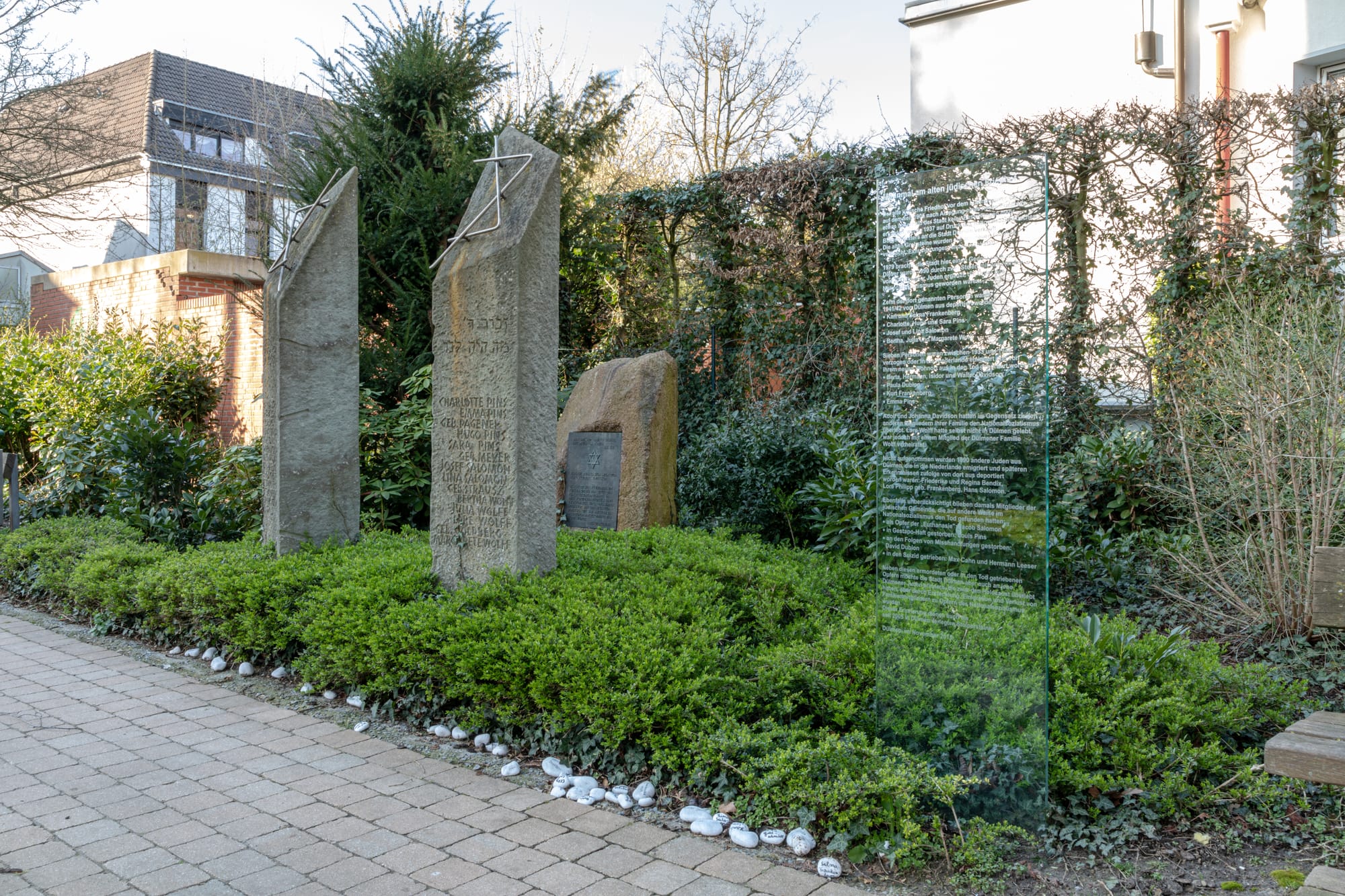
Memorial at the old jewish cemetery, Dülmen, North Rhine-Westphalia, GermanyIn Dülmen, the old Jewish cemetery was located at Lüdinghausen Gate – a burial site that had been used by Jewish community members since the early 17th century and existed until 1937. The dead of the Jewish community were buried there before a new cemetery was later established on Kapellenweg.In 1937, under pressure from the National Socialists and against the will of the Jewish community, the old cemetery was closed and the land sold. The gravestones of those buried there were moved to the then newer Jewish cemetery on Kapellenweg, but no exhumations took place within the tight deadline.After the cemetery was leveled, the vacated area was given the name Hindenburgplatz, named after the former Reich President Paul von Hindenburg. This square was created directly on the site of the former burial ground. Parts of the graves that had not yet been removed were covered; the local NSDAP used a swastika flower bed to plant the square, which symbolically represented the desecration of a sacred place.After the end of World War II, the name Hindenburgplatz was no longer officially used. The former cemetery area was later built over or used as green space, and it was not until decades later that people began to remember its former use and the Jewish community.Today, a memorial at the site of the old cemetery, the former Jewish cemetery outside the Lüdinghausen Gate gate, commemorates the Jewish citizens of Dülmen and their history.
Representative image for context; not directly related to the specific event in this article. License: CC BY-SA 4.0. Source: Wikimedia Commons.

A central finding presented in the book is that Nazi leaders were not a separate species; they were ordinary people. The text quotes Kelley’s view that leaders like Göring were not a unique breed and that people with similar impulses could be found in many societies, including the United States.

The narrative is noted for its vivid, almost novel-like prose. It has been described as the kind of material that inspired a film about the era, with Hollywood stars Russell Crowe and Rami Malek associated with a project titled Nuremberg.
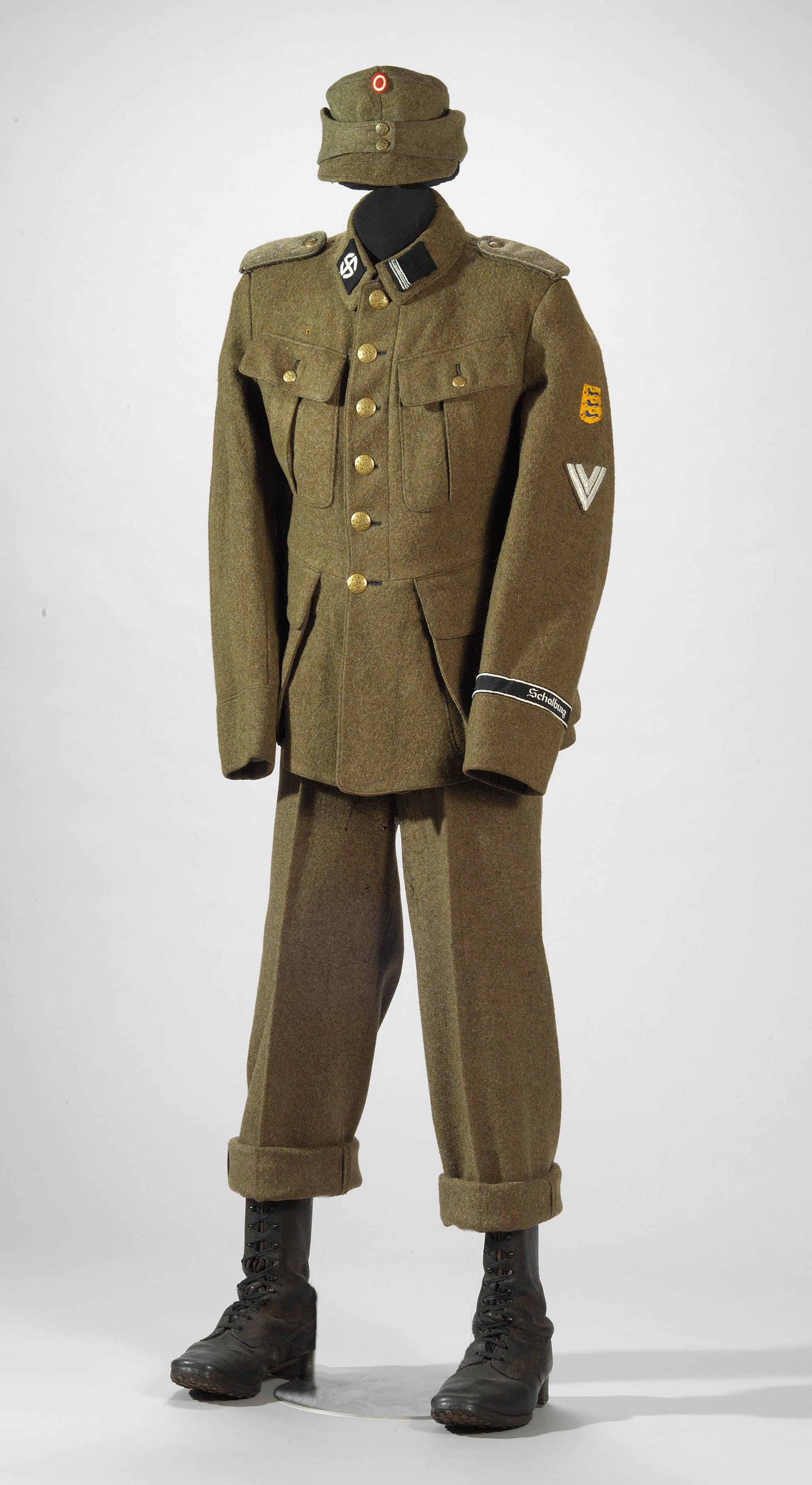
Field uniform for the Schalburg Corps (Danish: Schalburgkorpset, Germansk Korps), a Germanic volunteer corps 1943-45 and military unit within the Waffen-SS, the combat branch of the paramilitary SS organisation of Nazi Germany during World War II. Ordinary people recognized corps members by their presence in the city wearing their black SS uniforms. However, for military training, Danish army uniforms of the 1923 model were used.
Field cap with Danish cockade
Danish military field uniform coat/tunic model 1923, as part of the uniform for a Rottenführer in the Schalburg Corps
Yellow-brown fabric
Black collar patches, the right one with a sun symbol (round swastika, sun cross or sun wheel) as a divisional emblem, the left one with four horizontal silver stripes as Waffen-SS rank insignia|
Shoulder straps edged with silver braid on three sides
On the left upper sleeve, a yellow cloth badge with a (Danish national lesser coat of arms| (lille rigsvåben, nationalvåben) patch (national shield)
On the left arm a Rottenführer sleeve chevron;  vertical triangular shaped badge consisting of two 'V' shaped grey stripes embroidered on to a cloth base.
On the left sleeve cuff, a black cuff title (armband) with white edging stripes and "Schalburg" embroidered in white Fraktur script letters.
etc.
See Foreign Legions Of The Third Reich Vol. 1 by David Littlejohn (1987), pages 71–113, for detailed descriptions of uniforms and insignia of the pro-Nazi organizations and collaborationist military units in German-occupied Denmark during the Second World War.
The Germanic Corps, also known as Germansk Korps and renamed SS-Schalburgkorps, was formed under Germanic SS (German: Germanische SS) in April 1943 in Denmark under K.B. Martinsen's leadership. It had two groups: one was a paramilitary force, and the other included civilian sympathizers who provided funding. By winter 1943, it consisted of around 1,000 men led by Danish Waffen-SS officers. The SS-Schalburgkorps was deployed to suppress Danish resistance under the direction of Himmler, Best, and Martinsen.
Representative image for context; not directly related to the specific event in this article. License: CC BY-SA 4.0. Source: Wikimedia Commons.

Beyond the historical case studies, the book also follows Kelley’s own life in the aftermath. After the trials, he moved into criminology at the University of California, Berkeley, advising police and defense lawyers. The pressures and paranoia from his experiences strained his personal life, including a violent incident with his wife, and he ultimately died by swallowing cyanide in front of his family.

translator Chae Jae-yong notes the work challenges simplistic portrayals of groups and hateful language, stressing that “war begins at borders, but the mind that makes war possible travels without borders.” The book’s overarching point is that no one possesses immunity to evil and that society must learn from history to guard against repetition.

For U.S. readers, the book offers a stark lens on leadership, propaganda, and how moral and psychological factors enable totalitarian crime. Its historical microcosm—how ordinary people can become complicit in atrocity—speaks to contemporary debates over extremist movements, political rhetoric, and the resilience of democratic institutions, as well as the role of psychology and psychiatry in national security and policymaking.

Subscribe to Journal of Korea

Don’t miss out on the latest issues. Sign up now to get access to the library of members-only issues.
jamie@example.com
Subscribe