China-North Korea Cross-Border Rail Resumes Bidirectional Service After Six Years
Cross-border passenger rail service between China and North Korea resumed in both directions for the first time in six years on March 13, 2026, signaling a thaw in a once-quiet link on the Korean peninsula. An international train from Beijing to Pyongyang and a separate service from Dandong to Pyongyang began operating again after Pyongyang’s border closure during the COVID-19 pandemic.
At the mouth of the Yalu River, which forms the border between northeast China and North Korea, spectators gathered near the Amnok River Bridge to watch the trains pass. Signs in Chinese and Korean labeled the routes as Dandong–Pyongyang, reflecting a renewed, if carefully managed, cross-border corridor.
The Beijing-to-Pyongyang service, designated K27, comprises 18 carriages, with the rear two cars painted blue. The train arrived in Dandong at 7:35 a.m. and then departed the station at 10:00 a.m. for Pyongyang, carrying North Korean passengers on the onward leg.

The Pyongyang-bound service from Beijing departed at 5:27 p.m. the previous day and reached Dandong at 10:26 a.m. It left Dandong around 4:30 p.m. for Pyongyang, arriving at Pyongyang’s station at about 6:07 p.m., according to reports.
The Dandong–Pyongyang route runs daily, while the Beijing–Pyongyang service operates four times a week (Monday, Wednesday, Thursday, and Saturday). The involved trains included a blue locomotive and a mix of blue and dark green passenger cars, reflecting standard rolling stock for these international runs.
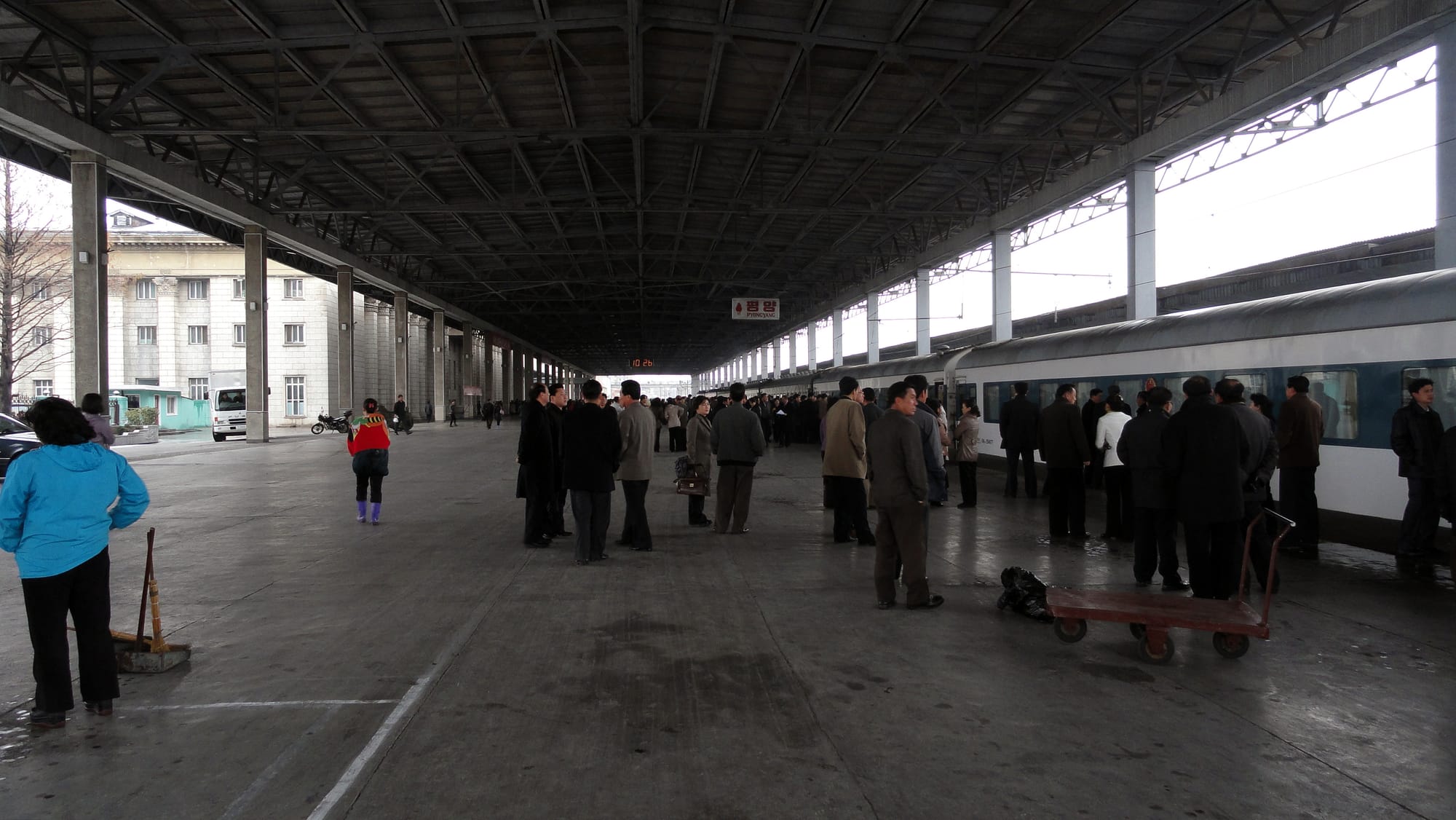
In Pyongyang, diplomatic figures including Wang Yajun, China’s ambassador to North Korea, were reported to have greeted passengers arriving on the Beijing-to-Pyongyang train, underscoring the symbolic importance of the reopening.
North Korea’s border closure began in early 2020 amid COVID-19 concerns, and the reintroduction of bi-directional cross-border rail traffic is part of a broader effort to expand tourism and economic exchanges. The government has signaled a policy to develop tourism as a core engine of growth, and travel firms have begun marketing North Korea itineraries, though officials warn that formal permission for ordinary tourism has not yet been issued.
For the United States, the resumption matters beyond Korea because it highlights shifting regional dynamics that could affect sanctions enforcement, regional security calculations, and supply-chain considerations. The development occurs ahead of high-level diplomacy involving China and the United States, and it may influence how Washington views Beijing’s leverage over North Korea and regional stability, as well as the potential for people-to-people exchanges and tourism-related revenue.